Bird Netting: Choosing the Right Mesh and Installing It
Contents[hide]
- 1. What Bird Netting Is and How It Works
- 2. Bird Netting Mesh Size: Which Size Do You Need?
- 3. Types of Bird Netting: Garden Netting vs. Heavy-Duty
- 4. Bird Netting for Fruit Trees and Gardens
- 5. Where Bird Netting Keeps Birds Out of Unwanted Areas
- 6. How to Install Bird Netting
- 7. Bird Netting vs. Bird Spikes for Bird Control
- 8. Bird Netting Prices and What to Look for When Shopping
- 9. Where Bird Netting Won’t Work
- 10. Maintaining Your Bird Netting
Bird netting is the most reliable way to keep birds out of a specific area: gardens, fruit trees, ponds, rooftops, and building openings. The key is mesh size: 3/4-inch for sparrows, 1-1/8-inch for starlings, 2-inch for pigeons. Material, weight, and installation all follow from knowing your location and which birds you are blocking.
In this article, we’ll cover which mesh size matches which bird, how to install it so birds cannot get underneath, and where netting does not work.
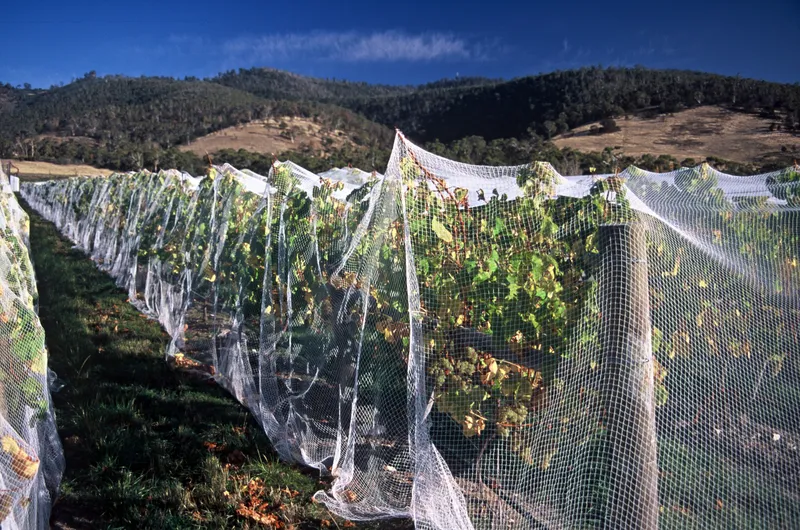
What Bird Netting Is and How It Works
The mesh works as a physical barrier that blocks birds from entering unwanted areas. Unlike visual deterrents or sound devices, it does not rely on startling birds or working on their instincts. It simply sits between the birds and whatever you want to protect.
The netting creates a boundary that birds cannot pass through, perch on, or nest behind. Installed well, it is a long-lasting fix that has held up on real buildings for decades. Installed poorly, with loose sections birds can push through, it does almost nothing.
Netting blocks access to openings: the fruit on your trees, the surface of a water feature, the ledge where birds gather, the space under your solar panels where starlings nest.
One thing worth knowing: properly installed bird netting does not harm birds. It is one of the few bird control methods that the USDA explicitly recommends as a humane exclusion tool. Birds encounter the netting and turn away. They are not injured, trapped (when installed correctly), or exposed to any chemical.
That makes it ideal for properties where preventing birds is important but harming them is not an option, including near protected species.
Bird Netting Mesh Size: Which Size Do You Need?
Mesh size is the most important decision you make when buying bird netting. Get this wrong and birds will get through.
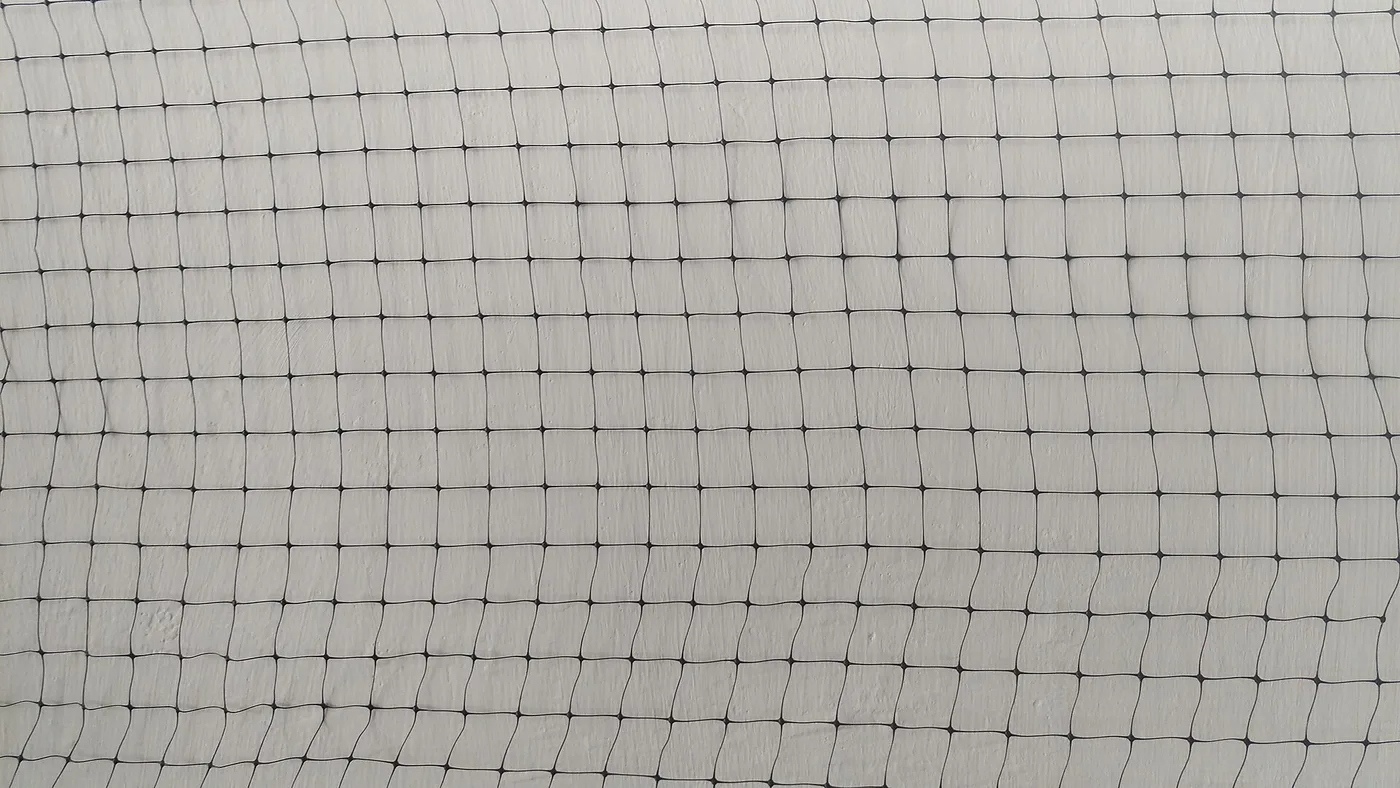
| Bird | Mesh Size |
|---|---|
| Sparrows and small birds | 3/4 inch (19mm) |
| Starlings | 1-1/8 inch (28mm) |
| Pigeons | 2 inch (50mm) |
The rule is simple: use the mesh size for the smallest bird you need to exclude. If you have both sparrows and pigeons, use 3/4-inch mesh. The larger birds cannot pass through the 3/4-inch opening any more than small birds can.
The most common mistake homeowners make is buying 2-inch netting when they have multiple bird species. Larger birds are excluded, but sparrows and starlings walk right through the same mesh.
Three-quarter-inch mesh costs only slightly more than the larger sizes, which makes it the safer default whenever you are not sure exactly which birds you are dealing with.
Types of Bird Netting: Garden Netting vs. Heavy-Duty
Not all bird netting is built the same. There are two broad categories, and which one you need depends on where you’re installing it and how long you expect it to last.
Garden Netting (Lightweight, Seasonal)
Garden netting is typically polypropylene mesh in 3/4-inch or smaller sizes. It is lightweight, easy to drape over plants and fruit trees, and inexpensive. The trade-off is durability: basic polypropylene breaks down under UV exposure, so expect 1 to 3 seasons of useful life outdoors. Garden netting also pairs well with the scare tactics and repellents that keep birds out of a garden.
This is the right choice for:
- Vegetable gardens and raised beds
- Strawberry patches
- Seasonal berry protection
- Low-stakes temporary jobs
Heavy-Duty Netting (Polyethylene, Long-Term)
Heavy-duty bird netting uses knotless or twisted polyethylene or nylon with UV stabilizers built into the material. Breaking strength is significantly higher, and quality products carry 5- to 10-year UV warranties. This is the grade installed on buildings, loading docks, and large permanent structures.
If you want a solution that lasts, choose polyethylene heavy-duty netting over budget polypropylene. The upfront cost is higher, but the annual cost works out lower over a 5- to 10-year lifespan.
Stainless Steel Mesh (Industrial)
Stainless steel mesh exists for the most demanding jobs: areas with persistent bird pressure, heavy structural use, or where fire codes require it. Most homeowners will never need it. It costs significantly more and requires professional installation.
Bird Netting for Fruit Trees and Gardens
Fruit trees are where bird netting earns its reputation. A starling flock can strip a cherry tree bare in a morning, and draping the canopy is the most reliable way to prevent it.
For trees, drape bird netting over the canopy before the harvest begins to ripen, usually two to three weeks out. Gather the netting at the trunk and tie it off so birds cannot enter from below, where they will look first.
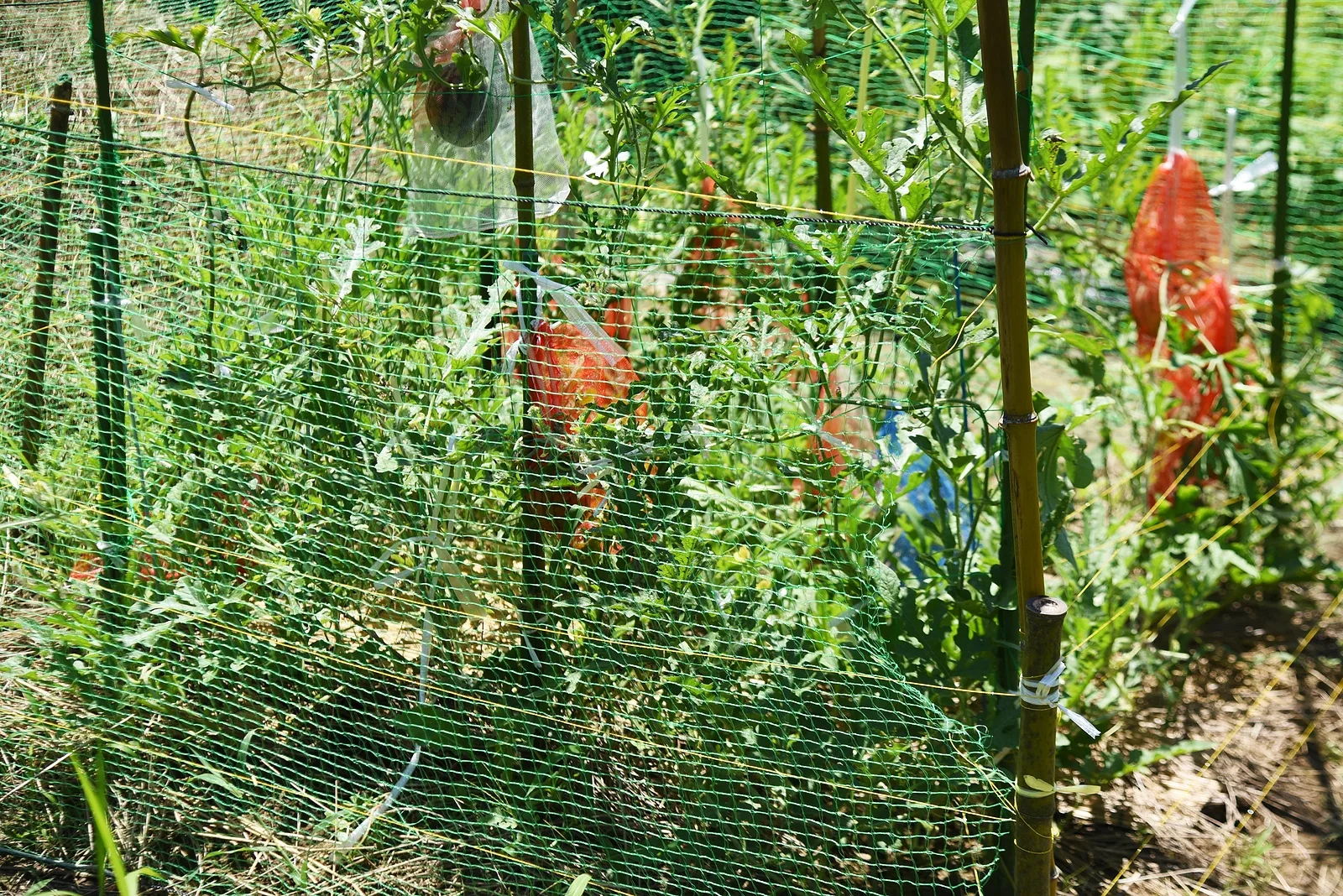
Garden netting works the same way over vegetable beds and plants. Lightweight mesh draped directly over your vegetables and plants protects leafy greens and strawberries from birds without chemicals or scaring. Secure the netting with garden staples at ground level or weigh it down with rocks so birds cannot lift it from underneath. Birds quickly learn that loose netting can be lifted, so securing the perimeter is the most important step for keeping birds out.
For larger trees, consider a simple frame to hold the netting above the canopy. This keeps the netting from pressing against ripening crops, reduces damage, and makes harvest easier. The netting drapes over the frame rather than sitting directly on the branches.
Pond owners find bird netting essential for keeping herons away from koi and ornamental fish. A net placed over the water surface and secured around the perimeter prevents birds from wading in or landing. Use 3/4-inch or 1-inch mesh for this. Larger mesh allows sparrows to slip through, and a bird tangled in pond netting is a problem.
Keeping birds away from a well-stocked koi pond saves far more in fish than the netting costs. Test the edges of the pond net after installation to confirm birds cannot lift them.
Where Bird Netting Keeps Birds Out of Unwanted Areas
It earns its keep anywhere you need a permanent physical barrier. The best jobs are:
Rooftops and ledges. Birds roosting on building ledges cause serious damage from droppings and nesting materials. Netting installed over ledges, parapets, and HVAC equipment stops the perching and nesting outright. This is the most common building exclusion job in the industry.
Eaves and soffits. Sparrows and starlings love to nest in the space under eaves. Netting sealed over these openings stops birds from entering, as long as it also covers the smaller gaps at the corners where a soffit meets the wall.
Solar panels. Birds nest under solar panels, where the warmth and shelter are ideal. Netting installed around the perimeter of solar panel arrays keeps birds from accessing the space beneath while leaving airflow open. This is now a very common bird control job.
Balconies. For balconies with a persistent bird problem, heavy-duty netting spanning the entire space is one of the few solutions that works long-term. The netting needs to fit tightly to the frame with no loose sections at the corners or edges.
Gardens, fruit trees, and ponds. The lightweight seasonal jobs covered above.
How to Install Bird Netting
The installation process depends on the application, but the fundamentals are the same: complete coverage, pulled taut, no gaps.
Measure first. Measure the area and add 10 to 15 percent for overlaps. Buying a quantity that falls short means a second order and unprotected space in the meantime. Order more than you think you need. It is easy to trim the excess.
Choose the right fasteners. For buildings and permanent structures, use stainless steel or galvanized hooks and eyebolts at the perimeter. Run a tension wire between the hooks first, then attach the netting to the wire using UV-resistant zip ties or hog rings every few feet. This creates a taut, sag-resistant installation that can handle wind without loosening.
For raised beds and tree installations, use landscape staples at ground level and garden clips or ties at the top of any frame. The key is keeping the netting tight to the structure on all edges so birds cannot enter from below or work their way through a seam.
Seal every seam and corner. The most common installation failure is loose sections at corners and seams where netting panels join. At panel seams, overlap by at least 6 inches and secure the overlap tightly. At corners, fold the netting and clip it closed. At ground level, stake the netting down or weigh it with rocks so birds cannot lift it from below.
Test the installation before calling it done. Walk the full perimeter and look for openings or loose sections. Push your hand against the netting from outside to find soft spots. If the netting moves more than a few inches, tighten it. Any section loose enough for a bird to push through is an entry point. The goal is to prevent birds from having any access at all.
Bird Netting vs. Bird Spikes for Bird Control
Bird netting and bird spikes are both physical deterrents, but they solve different problems.
Bird spikes prevent landing on narrow ledges and surfaces. They do not enclose or cover a space. For a window sill, a roof ridge, or a parapet edge, spikes work well. For a large open area, like a rooftop mechanical zone, a pond, or a garden, netting is the right tool.
It covers the whole space, not just the edge.
The two solutions complement each other in most bird proofing plans. Spikes on individual ledges, netting over larger enclosed areas: used together they cover the full range of bird deterrents needed on most properties. For ledges where spikes would look too harsh, bird wire is the low-profile third option that stays nearly invisible from the ground and still works against pigeons and large birds.
Bird Netting Prices and What to Look for When Shopping
Prices vary based on material, mesh size, construction quality, and the quantity you need.
Lightweight garden netting is usually sold by the roll. A standard 14 x 45 foot roll covers 630 square feet and generally costs $20 to $60. Local hardware stores stock common mesh sizes, which makes a mid-project top-up easy if an oddly shaped bed needs more than expected.
Heavy-duty polyethylene netting is also commonly sold by the roll. A 25 x 50 foot section covers 1,250 square feet and generally costs $100 to $200 in materials. When shopping online, compare the full roll dimensions and mesh size before adding it to your cart.
Professional installation adds $2 to $10 per square foot on top of materials, depending on access difficulty and the complexity of the work. A balcony installation or building exclusion project typically runs $400 to $2,000 total.
Where to buy. Hardware stores stock basic garden netting in common sizes. For heavy-duty exclusion netting, bird control specialty retailers carry better products, and they publish tensile strength and UV life ratings the hardware-store brands often skip. Order mounting hardware (zip ties, clips, hog rings) at the same time as the netting so you can install it the day it arrives.
What to check before buying:
- Mesh sizes available. Not all sizes are available in every roll. Standard sizes are 3/4-inch, 1-1/8-inch, 2-inch, and 3-inch. An option that only comes in 2-inch mesh will not keep sparrows out.
- UV life rating. Products without a UV rating tend to be basic polypropylene, effective for one to two seasons but not for permanent installations. For anything you want to last, look for a stated UV life of five years or more.
- Breaking strength. A minimum 40 lbs tensile strength is recommended for permanent exclusion netting. Lightweight garden netting is fine for keeping birds out of vegetable beds and berry patches, but will not hold up on a building or fence.
- Quantity needed. Total up the square footage of every surface you are covering, not just the main panel, since corners and overlaps add up fast on an irregular shape.
- Shipping timeline. If birds are actively causing damage, check the estimated shipping time first. Local hardware stores stock basic garden netting on the spot; specialty heavy-duty netting may need to ship from a distributor, adding several days.
- Reviews. Check reviews specifically about installation ease and how the netting holds up after a full season outdoors. The quality gap between similarly priced options is real, and reviews reveal it faster than a spec sheet does.
Confirm the mesh size, UV life, and breaking strength on the manufacturer’s spec sheet before you buy.
Bird Netting We Recommend
These are two structural exclusion options with different mesh sizes. Match the mesh to the birds you need to exclude and the opening you need to cover.
Bird Barrier StealthNet 3/4-inch netting is one option for small-bird exclusion where correctly sized mesh is needed.
As an Amazon Associate, we earn from qualifying purchases.
Bird-X half-inch structural bird netting is another close-mesh option for building exclusions and enclosed spaces.
Install netting taut, never draped, since loose netting can entangle birds. Never cover or seal an active nest. For building exclusion or unsafe or high access, hire a professional.
Where Bird Netting Won’t Work
It is not a universal solution. There are situations where it is the wrong tool.
Moving targets. Bird netting works by covering a fixed space. It cannot protect a moving vehicle from droppings, a wide-open area from passing birds, or a large space that has too many access points to seal completely. If the area cannot be fully covered, birds will get in.
Poorly sealed installations. A gap anywhere in the run gives the netting only partial protection. Partial netting is sometimes worse than no netting, since it keeps out the larger birds while sparrows and starlings still slip through the same gap. Once one bird finds it, others tend to follow, so a small oversight can become a larger problem quickly.
Predators and other critters. It is not designed to stop other animals. Squirrels, raccoons, and other critters that apply sustained pressure or chew will damage or breach lightweight netting. Heavy-duty polyethylene handles this better than basic polypropylene, but if your primary concern is mammal predators, a different solution is more effective.
Situations with birds already inside. Never install netting over an area where birds are already roosting or nesting inside. Trapping birds inside a netted space causes stress and can injure them. Clear the area of birds first, then install the netting. For active nests of protected species, wait until the nesting season ends before installing netting over that space. Moving too early risks violating the Migratory Bird Treaty Act.
Maintaining Your Bird Netting
Good bird netting installed correctly requires minimal maintenance, but it does require some attention.
Inspect the installation every few months. Look for tears, sagging sections, and spots that have opened at seams or corners. Birds, wind, and weather gradually work at weak points. A small repair caught early costs minutes.
A missed spot that lets birds establish a nest inside the protected space costs much more to resolve.
Clear debris from the netting surface after storms. Leaves and branches accumulate on horizontal sections and add weight that causes sagging and eventually tearing. A quick clearing after any significant storm prevents progressive damage and keeps the netting intact season after season.
In regions with heavy snowfall, consider removing lightweight garden netting for the winter. Snow accumulation can collapse basic polypropylene netting entirely. Heavy-duty installations are designed to withstand weather loads, but seasonal garden netting is not.
Each spring, pull the netting taut wherever it has loosened and re-secure any fasteners that have worked free. Check every part of the installation, including the spots that are hard to reach. Birds are effective at locating the one gap that gets overlooked. A well-maintained installation can keep birds out for years without replacement.
That upkeep habit is the cheapest long-term way to keep birds off your property.
Images: Bird netting on grapevines near Harvest by Mark Smith, CC BY 2.0, via Wikimedia Commons. Anti-bird netting close-up by SaturninoOpi, CC BY-SA 4.0, via Wikimedia Commons.


Free: The 5-Step Bird-Proofing Checklist
Work through the right steps in the right order, before spending money on the wrong deterrents. Printable PDF, straight to your inbox.
No spam. Unsubscribe any time.