How to Get Rid of Mockingbirds (Legally and Humanely)
Contents[hide]
- 1. Northern Mockingbirds Are Federally Protected
- 2. Why Northern Mockingbirds Target Your Yard
- 3. How to Stop a Mockingbird Singing at Night
- 4. Mockingbirds Chasing Other Birds From Feeders
- 5. Mockingbirds Attacking Your Car Mirror
- 6. What to Do During Nesting Season
- 7. How to Discourage Mockingbirds Long-Term
- 8. When to Call a Professional
To get rid of mockingbirds, change what is drawing them, because you cannot legally trap, relocate, or harm a protected bird. Space your feeders out to break up territory fights. Cover car mirrors to stop reflection attacks, and run white noise indoors for the nighttime singing. Most mockingbird problems resolve on their own once a brood fledges.
In this article, we’ll cover how to get rid of mockingbirds’ nighttime singing, feeder bullying, and dive-bombing.
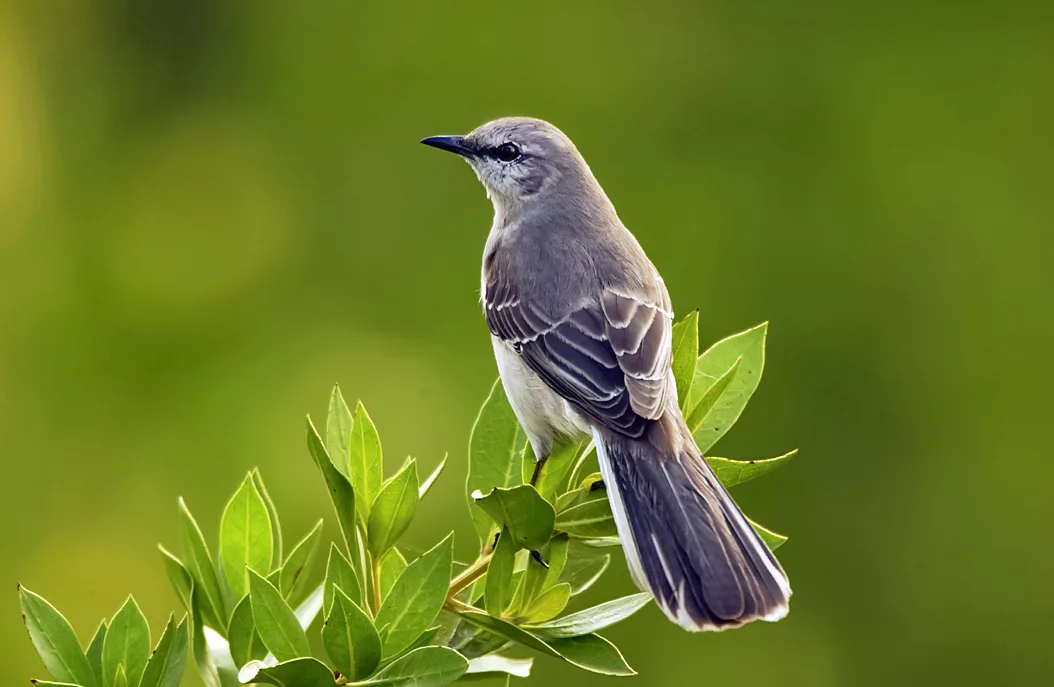
Northern Mockingbirds Are Federally Protected
Northern mockingbirds are protected under the Migratory Bird Treaty Act. It is a federal offense to trap, kill, or disturb an active mockingbird nest. Fines reach $15,000 per offense. This protection covers the bird, its eggs, its nest, and its chicks.
The three non-native species not protected under the MBTA are house sparrows, European starlings, and feral pigeons. Northern mockingbirds are not in that group. They have full protection year-round.
Every humane deterrent here works by making your yard less attractive or less comfortable for mockingbirds. None of them remove or harm the bird. All are legal.
Why Northern Mockingbirds Target Your Yard
Mockingbirds eat almost anything: insects, berries, fruit, and whatever is at a feeder. If your yard offers steady food, a mockingbird claims a territory around it and defends that against every other bird.
What makes northern mockingbirds unusual is the territory they defend. A single mockingbird can hold one to two acres through song, display, and direct chasing. That covers most of a suburban yard and often the neighbors’ yards as well.
They also return to the same territory year after year. Once a mockingbird claims your yard, it comes back each breeding season. That continues until the food sources and perches that attracted it change significantly.
How to Stop a Mockingbird Singing at Night
Northern mockingbirds sing at night during breeding season, primarily March through August. The singer is almost always an unmated male trying to attract a female. Once he finds a mate and nesting begins, nighttime singing drops off significantly.
There is no deterrent that reliably stops a mockingbird from singing. The bird is doing what it evolved to do. What you can control is the impact on your sleep.
Short-term fixes:
- A box fan or white noise machine in the bedroom masks the sound effectively. Mockingbird songs are loud but consistent; white noise fills in the gap.
- Close windows on the side of the house facing the bird.
- Earplugs work, and there is no shame in using them during breeding season.
Moving the singing perch: If there is a specific spot the mockingbird returns to every night, try blocking it. Bird spikes on a fence post or TV antenna make the perch unusable. The mockingbird will find a different spot to sing from. If that new spot is farther from your bedroom window, the problem is effectively solved.
Motion-activated lights near the singing perch can briefly interrupt the song. The bird resumes quickly, but repeated interruptions across the night can push it to a different area.
Mockingbirds Chasing Other Birds From Feeders
This is the complaint that frustrates backyard birders most. A single northern mockingbird can claim every feeder in a yard. It spends its days patrolling between them, chasing off bluebirds, cardinals, and anything else that lands.
This territorial behavior is strongest in spring and summer when mockingbirds are defending both a food source and a nesting area. The same bird that aggressively defends feeders in June becomes noticeably calmer in October.
The most effective fix is to change the layout of your feeders.
Rearranging Your Bird Feeders
Spread your bird feeders at least 30 feet apart. A mockingbird defends its territory by patrolling between fixed points. When feeders are clustered together, it controls all of them easily. Thirty feet between feeders makes the whole patrol impractical, and other birds find time to eat.
Dense shrubs near secondary feeders give bluebirds, cardinals, and other birds a safe place to wait and retreat to. Mockingbirds are less persistent when other birds have nearby cover to duck into between attempts.
Try a Dedicated Suet Feeder
Mockingbirds are drawn to suet (the fat cakes you hang out for clinging birds), mealworms, and fruit. Add a suet feeder on the far edge of the yard, away from your main seed feeders. Bait it with suet and a few mealworms. Mockingbirds often claim the suet feeder and patrol the seed feeders less.
That shift gives bluebirds, tufted titmice, and other birds more access to the areas the mockingbird is less focused on.
Skip the predator decoys here. A plastic owl or fake hawk does little against a territorial mockingbird. It will boldly scold and dive-bomb a real hawk or a cat just the same. Save your effort for the feeder and perch changes that actually work.
Fruit also draws mockingbirds away from seed feeders. A platform feeder with cut grapes, raisins, or apple slices can become their preferred food source. Place it well away from your main feeders. Then it becomes a dedicated mockingbird spot, not a new territory anchor next to the feeders you want to share.
Switch some of your seed feeders from platform style to tube feeders with small perches. Tube feeders favor smaller birds and are harder for mockingbirds to use comfortably. This cuts how much seed and suet the mockingbird can reach, without shutting off its food entirely.
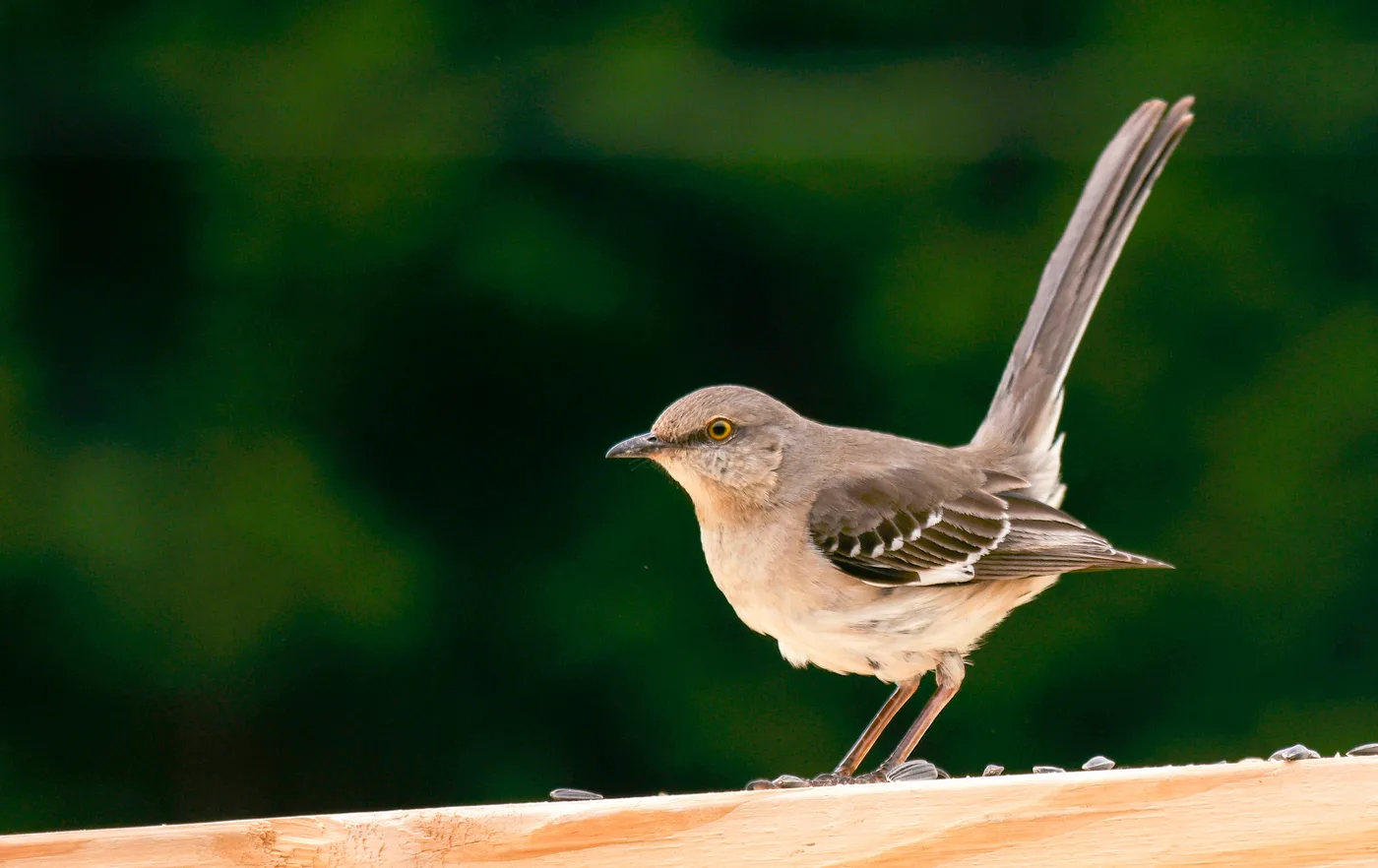
Mockingbirds Attacking Your Car Mirror
Northern mockingbirds attack car mirrors and windows because they see a reflection and perceive it as a rival bird. They cannot recognize that the reflection is themselves. The attack includes pecking, flapping, and leaving droppings on your car.
The fix is to eliminate the reflection. Cover your side mirrors with grocery bags or reusable mirror covers when you park near a mockingbird’s territory. This is the most reliable approach and takes under a minute.
For window attacks, apply window decals or frosted window film to the outside of the glass. The mockingbird attacks what it sees. Break up the clear reflection and the attacks stop.
The behavior is seasonal. Once the mockingbird starts feeding babies rather than defending territory, the mirror attacks usually stop without any intervention. If you cover the mirrors for a few weeks during peak aggression, the problem typically resolves when the nesting cycle moves on.
Mockingbirds are not the only bird that does this. If a much larger one is battering your car, it may be a wild turkey, which attacks its reflection the same way.
What to Do During Nesting Season
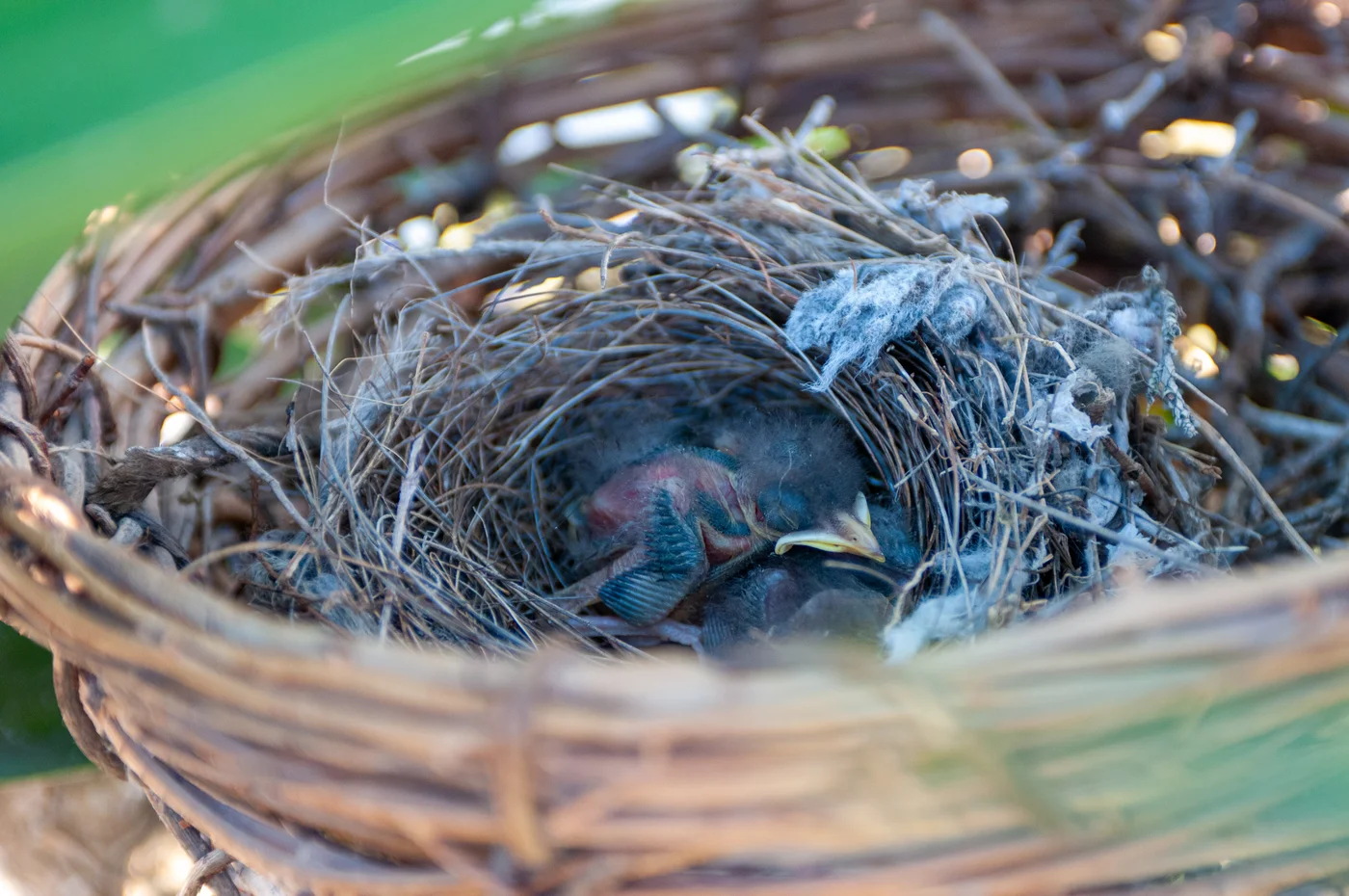
Nesting season is when northern mockingbirds are most aggressive. A pair with eggs or chicks in the nest will dive-bomb people, pets, and other birds that approach too closely. This is brood protection, and it is effective.
Northern mockingbirds raise two to three broods per year, each taking four to six weeks from egg-laying to fledging. From March through August, there is usually an active brood somewhere in the territory.
During active nesting, take a different route around the nest location when possible. The bird defends a radius of roughly 30 to 50 feet from the nest, and stepping outside that radius is usually enough to stop the diving. A hat or umbrella provides cover during unavoidable passes near the nest. Keep pets out of the nesting area until the brood fledges.
Do not remove the nest while it has eggs or chicks inside. This violates the MBTA regardless of how aggressively the birds are behaving. Once the nest is empty and the brood has fledged, it can be removed. Stopping birds from nesting in the same spot the following year requires removing the attractants or blocking the site before the next spring.
How to Discourage Mockingbirds Long-Term
The most effective long-term approach is to reduce the food sources and perches that made your yard attractive.
Remove berry-producing plants. Northern mockingbirds are strongly drawn to yards with berries. Holly, pokeweed, pyracantha, and multiflora rose are all favorites. Removing these plants removes the food source that draws mockingbirds back to the same yard each year.
Switch feeder types. Tube feeders with small perches favor smaller birds and are harder for mockingbirds to use comfortably. Replacing platform feeders with tube feeders reduces the suet and seed the mockingbird can access from your yard.
Block favorite singing perches. If there is a fence post, aerial, or ledge the bird uses consistently, bird spikes or bird wire on that specific surface removes the landing point. Mockingbirds need an exposed elevated perch to sing from. Denying the best perch in the territory shifts them to a less convenient location.
Wait out the season. Mockingbird aggression peaks during active nesting and drops significantly after the last brood of the year fledges. In fall and winter, northern mockingbirds are calmer and focused more on foraging than defending. If the food sources are reduced over winter, the bird may establish a smaller territory elsewhere the following spring.
When to Call a Professional
Most mockingbird situations resolve without outside help. The bird’s behavior is tied directly to the breeding cycle. When the cycle ends, the aggression fades.
When mockingbird behavior causes real property damage or safety concerns, a wildlife control professional can help. They can read the territory, find the nest and its timing, and tell you the legal window to remove attractants or block nesting sites. They cannot remove or relocate the bird itself, but they can help you understand exactly when and how to act legally.
For keeping birds off specific spots, a few deterrents do the job. To shut a problem bird out of the whole yard, bird-proofing covers the full exclusion approach.
Images: Northern mockingbird by Ryan Hagerty / USFWS, public domain. Male Northern Mockingbird by IzzyMPhotography, CC BY-SA 4.0. Northern Mockingbird Nestlings by Zong-Xiang Lee, CC BY 4.0. Via Wikimedia Commons.


Free: The 5-Step Bird-Proofing Checklist
Work through the right steps in the right order, before spending money on the wrong deterrents. Printable PDF, straight to your inbox.
No spam. Unsubscribe any time.