How to Get Rid of Starlings (Before They Take Your Feeders)
Contents[hide]
To get rid of starlings, switch to caged, weight-sensitive, or upside-down suet feeders, then seal any opening around vents, eaves, and roof gaps before spring. Those feeders shut out starlings while still feeding smaller birds. European starlings are not federally protected, so unlike most birds, you can also remove nests and use stronger control if needed.
In this article, we’ll cover how to get rid of starlings, which vents to seal first, and why their invasive status gives you more options.
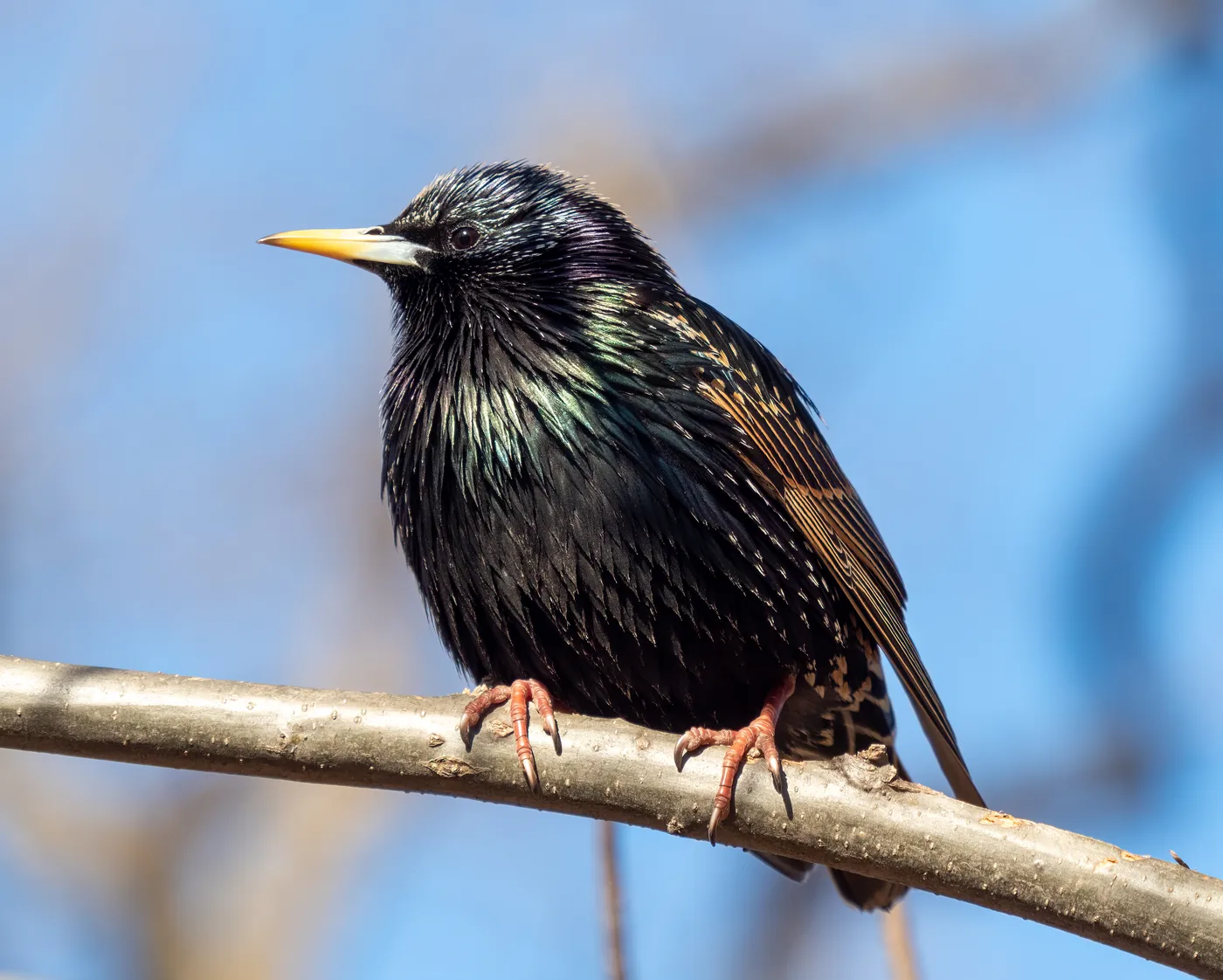
Why Starlings Are a Problem
European starlings got here in 1890, when a group of Shakespeare enthusiasts released 60 birds in Central Park. There are now an estimated 200 million across the continent, with no natural checks on their numbers. Over more than 130 years, the species has crowded native cavity nesters out of the nest sites they need: bluebirds, tree swallows, purple martins, wood ducks, and flickers. Like house sparrows, the other major invasive at American feeders, they outcompete the locals through sheer aggression and numbers.
At bird feeders, starlings eat almost anything: sunflower seeds, suet, mealworms, fruit, and scraps. A group of 20 or 30 birds can empty a feeder in minutes, leaving nothing for all the birds you actually wanted to attract. Even larger birds like blue jays get crowded out when dozens of starlings commit to a feeder. The rest simply go elsewhere.
What the flock does not eat off the feeder it cleans off the ground below.
Structurally, the birds cause problems by nesting in exhaust vents, dryer vents, and gaps in eaves. Unlike pigeons, which roost on open ledges, starlings want enclosed cavities, and a bird that slips through a vent often ends up nesting in the attic. Nesting materials packed into an active vent are a fire hazard.
Droppings under a large roost corrode siding and masonry and create an environment loaded with fungi and bacteria. In farm areas, flocks damage fruit crops and contaminate livestock feed. Farmers see starling control as an economic issue, not a comfort issue.
How to Get Rid of Starlings, Step by Step
Work these in order. Each step makes the next one bite harder.
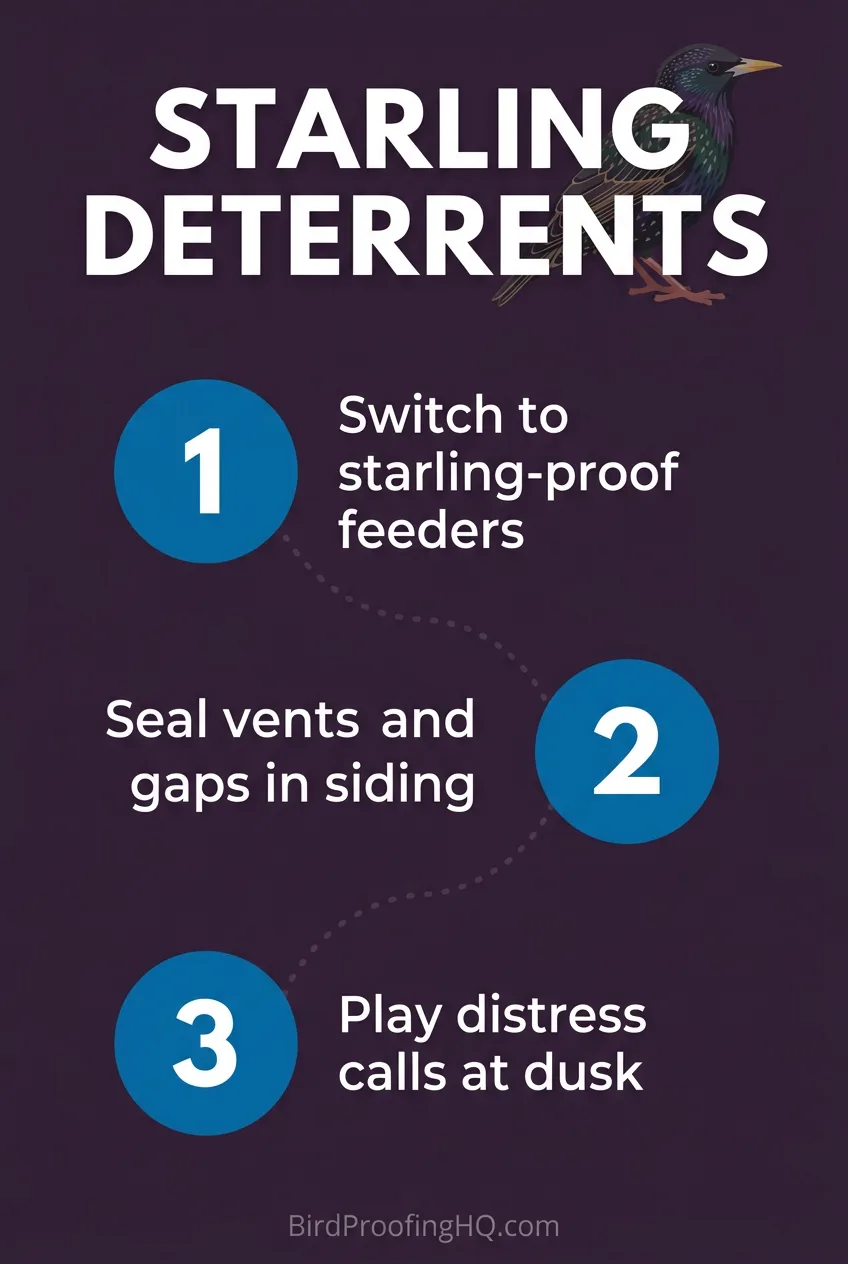
Step 1: Switch to Starling-Proof Feeders
Feeder design is the fastest lever in backyard bird control, and it is highly effective on its own. Starlings are chunky birds that need a stable platform to land and feed from. The right feeder makes access annoying enough that the birds move to an easier food source.
Caged feeders are the most reliable exclusion method. A cage around the feeder, with openings sized for small birds, lets chickadees, nuthatches, and finches through. It blocks starlings, larger birds, and squirrels.
Weight-sensitive feeders close when a bird heavier than a set threshold lands on the perch. Most come with adjustable settings. Set the threshold below a starling’s weight (about 3 ounces), and starlings are shut out while smaller birds keep feeding.
Upside-down suet feeders are the single best change for protecting suet specifically. Starlings love suet but cannot feed comfortably while hanging upside-down. Woodpeckers and nuthatches do it naturally and are unaffected.
Remove tray feeders and large hopper feeders while you are deterring starlings. Both designs provide exactly the stable open platform a starling wants, and tray feeders in particular are an invitation to the whole flock.
Step 2: Change the Seed and Limit the Food Source
Safflower seeds and nyjer (thistle) are both reliably ignored by starlings. Switch your main feeder seed to safflower. Cardinals, chickadees, and finches eat it readily, and the starlings mostly stop visiting on their own. Nyjer in small-port tube feeders feeds goldfinches and siskins while giving a starling nothing to work with.
Avoid millet, cracked corn, and suet reachable from the top of the cage; all are favorite starling food. Sunflower seeds are trickier. Starlings handle hulled sunflower easily but struggle with thick shells. White striped sunflower seed in the shell is a reasonable compromise that cardinals and jays still love.
If you want to keep feeding shelled sunflower to other birds, do it inside a caged feeder. Peanuts in the shell, offered in a mesh feeder, are another good option; nuthatches work the mesh easily while starlings rarely bother.
Clean up spilled seeds under the feeders too. Starlings are just as happy feeding off the ground. A seed-covered patch of lawn or garden keeps the flock on your property even after the feeders are fixed.
The goal is to cut every food source at once, not one at a time. Few things deter a flock faster than an empty buffet.
Step 3: Seal Nesting Sites
Starlings nest in cavities and they move fast. An open dryer vent or a gap behind fascia board that goes unnoticed in January can have a full nest in it by March.
Walk the exterior of your building in late winter, before starlings arrive in your area, and check every opening. Dryer vents, bathroom exhaust vents, ridge vents, and any gap in siding or fascia are all potential sites. Every one of them appeals to a scouting pair. This is the heart of starling-proofing a property: the birds cannot nest in a cavity they cannot enter.
Install vent covers with mesh sized at half an inch or smaller. Standard vent covers with wide mesh allow starlings to enter. Hardware cloth stapled or screwed over an opening works as well.
Check under eaves for any point where the birds could squeeze behind fascia or into a gap. A half-inch hole is enough. Caulk or seal anything you find.
Cap chimneys if they are uncapped. Starlings nest readily in unused chimneys, as do sparrows and other cavity nesters. A stainless steel chimney cap with mesh keeps all of them out and keeps nesting debris out of the flue.
Step 4: Remove Nests Promptly
Because European starlings are not protected under the Migratory Bird Treaty Act, you can remove their nests, eggs, and nesting materials without a permit. Acting quickly makes this one of the best starling control moves available. For vent nesters, it is often all it takes to get rid of starlings completely.
Remove nests as soon as you find them being built. Starlings build fast; a nest can go from a few twigs to a finished structure in days. The sooner you intervene, the less attached the pair becomes to the site.
Wear gloves when removing nests. Starling nests often carry mites and other parasites. Seal the removed material in a plastic bag before disposing of it.
After removing a nest, install a vent cover or seal the opening immediately. Starlings will fly back and rebuild within days if the entry point is still open. A determined pair will test it for a week or more.
Step 5: Scare Starlings With Visual and Sound Deterrents
For outdoor roosting, and anywhere full exclusion is not possible, the goal is simple. Scare the birds consistently enough that the site stops feeling safe. Deterring starlings outdoors comes down to consistency: no single scare tactic holds on its own, but the combination does.
Reflective tape and shiny objects create movement and flashes of light that scare starlings on approach. Hang strips from eaves, fence lines, and trees near problem areas, and hang a few extra near landing spots. Rotate positions every few days to prevent habituation; visual deterrents that never move become scenery.
Predator decoys (owl and hawk effigies) work at first, but starlings sense a fake within a week. Move decoys to a new location every two to three days or they stop working entirely.
Distress call recordings are the most effective sound tool for breaking up roosts. Starling distress calls and predator attack sequences played at dusk, when the birds settle in for the night, disrupt the whole flock. Most units have customizable settings, so randomize the intervals and rotate the sound types rather than running a fixed loop the birds learn to ignore. Noise complaints from neighbors are a real consideration, so aim speakers at the roost and keep sessions short.
Other noise methods add pressure on top: banging pots at dusk, air horns, even a motion-activated sprinkler that startles birds when they land. None of these alone will deter a committed flock. But they make every visit cost something, and that is how you wear down a species this stubborn. Across species, a natural bird repellent is another humane layer to add.
Getting Rid of a Large Roost
A few starlings at the feeders is one problem; ten thousand in the trees behind a shopping center is another. Large winter roosts form in dense trees near food and warmth. The birds favor industrial sites, parking lots, and urban woodlots. Roosts that size drop a frightening amount of acidic droppings, turning the ground underneath toxic.
Getting rid of starlings at roost scale uses the same logic as the backyard version, just louder and more persistent. The standard playbook combines distress calls and pyrotechnic noise at dusk for several evenings in a row, scaring the roost apart. It also thins the interior branches of roost trees, so the canopy holds less warmth and shelter. That keeps the birds from re-forming there.
Done right, the flock relocates within a week. Done halfway, the birds shuffle one block over and wait you out.
If the roost is on your property and beyond a few dozen birds, skip straight to professional help. Roost dispersal is genuinely a numbers-and-persistence game, and bird control companies run it with gear and permits a homeowner cannot match.
When to Call a Bird Control Professional
If starlings are nesting inside a building in large numbers, call a professional exclusion specialist. They can find every entry point and install commercial-grade mesh and barriers. For large roosts causing property damage or health concerns, call a licensed wildlife control company.
They run the full dispersal program: distress calls, pyrotechnics, and roost tree management. Bird control pros also deal with the cleanup, which at roost scale is a genuine biohazard job.
For broader exclusion methods, bird-proofing your home covers physical barriers for every structure type. If starlings are outcompeting native species at your feeders, a few bird deterrents widen the toolkit. And house sparrows are the other invasive that plays by the same legal rules. Starlings are persistent, but with layered methods and a sealed building, you can keep them off your property for good.
For any other bird problem, the how to get rid of birds hub is the place to start.
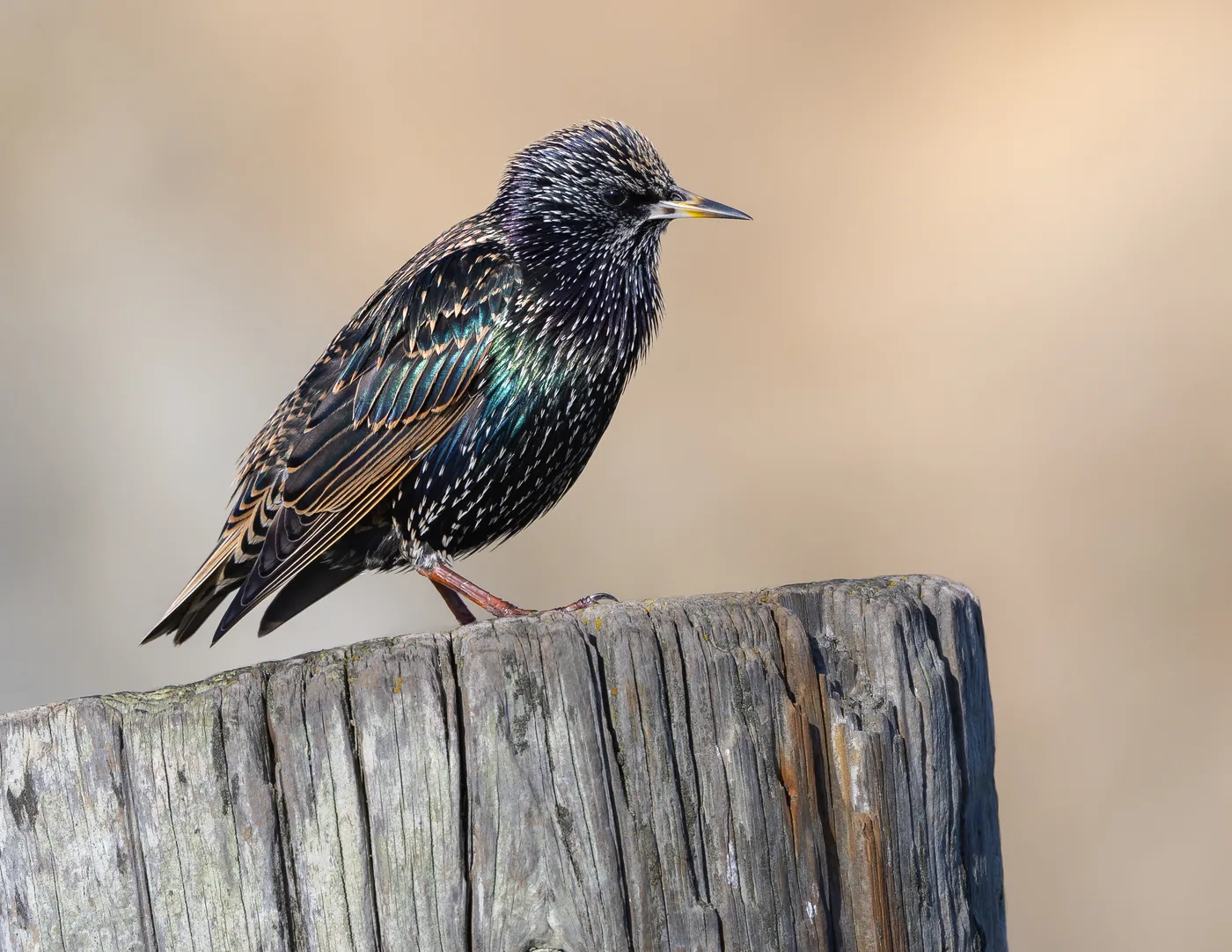
Images: European starling on a branch by Rhododendrites, CC BY-SA 4.0. Starling close-up by Frank Schulenburg, CC BY-SA 4.0. Via Wikimedia Commons.
.jpg)
_at_Bodega_Head-1209.jpg)
Free: The 5-Step Bird-Proofing Checklist
Work through the right steps in the right order, before spending money on the wrong deterrents. Printable PDF, straight to your inbox.
No spam. Unsubscribe any time.