What Scares Crows Away? Humane Deterrents That Match the Problem
Contents[hide]
Quick Answer
Crows are scared by sudden movement, predator and distress calls, and anything they can't predict. Every scare tactic fades as they learn it's harmless, so move it every few days and take away the food keeping them there.
In this article, you'll learn which scare tactic fits the crow problem you actually have. We'll cover reading crow behavior, rotation timing, and when scaring fails.
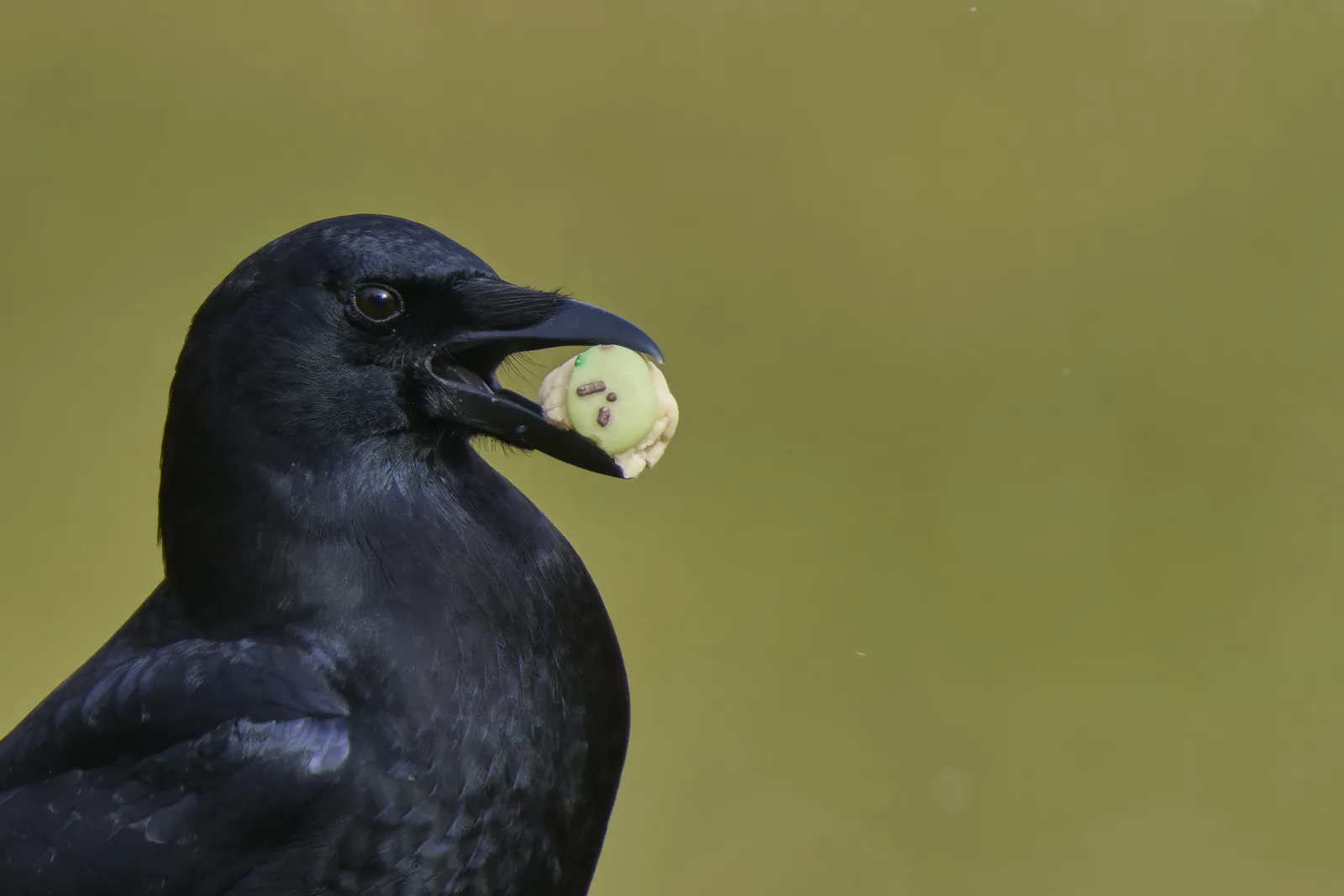
What Crows Are Actually Afraid Of
Ask what scares crows away and you’ll get a list of devices. The useful answer is a rule instead.
A scare tactic has to clear two bars, not one. The crow has to sense it. Then the crow has to read it as a threat to its own safety.
USDA-APHIS Wildlife Services says it plainly in its bird dispersal review. A technique that worked at first fails later, once birds stop reading it as threatening (Bird Dispersal Techniques, USDA-APHIS Wildlife Services). That second bar is where most homeowner attempts die.
The first bar rules out a whole product category. Ultrasonic repellers fail it outright, because birds don’t hear in that range. The same APHIS review says so, and Minnesota’s DNR warns crow buyers off them directly (American Crow Damage Management, Minnesota DNR).
One more habit shapes everything below. A crow in the air spooks easily. A crow already settled in a roost tree is stubborn. That’s why Washington’s wildlife agency tells people to start scaring as the birds arrive, not after they’ve perched (Living with Wildlife: Crows, Washington Department of Fish and Wildlife).
Match the Tactic to What the Crows Are Doing
“Crows in the yard” is four or five different problems wearing the same feathers. Watch for a day before you buy anything, and note what the birds are doing, when they show up, and how many there are.
| What you’re seeing | What the crows want | What actually moves them |
|---|---|---|
| One to eight birds on trash, feeders, or pet bowls | A reliable, easy meal | Close the food source. Deterrents only hold once it’s gone |
| Birds working a garden bed or fruit tree | Seedlings, corn, soft fruit | Netting or line over the crop. Barriers don’t wear off |
| A few birds perching, calling, leaving droppings | A lookout perch with a view | Motion sprinkler, moved reflective tape, denied perch |
| Birds diving at your head in May or June | To keep you away from a fledgling | Nothing. Detour around the tree for a few weeks |
| Hundreds arriving at dusk, autumn to late winter | A warm, sheltered communal roost | Coordinated dusk harassment, most nights, for weeks |
The rest of this page works through those rows. If you want the full removal sequence rather than the scare-tactic decision, how to get rid of crows covers food lockdown, barriers, and roost work end to end.
Crows Raiding Trash, Feeders, or Pet Bowls
This is the one case where a scare device is almost always the wrong first purchase. A crow will tolerate a startling amount of noise and movement for a meal it has already banked on, so the deterrent isn’t competing with the crow’s nerves. It’s competing with dinner.
Fix the reward first. WDFW notes crows hit unattended garbage at first light, which is why bags left out the night before are such a reliable draw. Put cans out in the morning, clamp or bungee the lids, and keep pet bowls indoors. For seed specifically, keeping crows away from bird feeders covers feeder designs that let chickadees eat while a crow can’t.
Once the food is gone, a deterrent has an easy job: it only has to make the site feel unrewarding for the couple of weeks the birds keep checking back.
Crows Working a Garden Bed or Fruit Tree
Barriers beat scaring here, and it isn’t close. A crow can habituate to a noise. It can’t habituate its way through netting.
Four-inch mesh bird netting keeps crows off fruit, though robins and starlings still get through. Tie it at the base of the shrub or around the trunk so birds can’t walk in underneath. WDFW also suggests covering germinating corn and similar crops until the plants are about eight inches tall.
For open ground, Minnesota’s DNR describes a lighter option: parallel monofilament or wire lines strung six to eight feet up, made more visible with ribbon or foil. Mesh sizing and installation detail live in the bird netting guide.
Scare devices belong here as a supplement while the netting goes up, not as the plan.
A Few Crows Perching and Calling on the Roof
This is the mildest version of the problem and the one where movement-based deterrents do their best work. A motion-activated sprinkler is worth a look before anything else, because it does something the rest of this list can’t: it delivers a real, physical consequence at an unpredictable moment. WDFW describes that combination of a startling stimulus with an actual sensation as what makes the device work.
Reflective tape and hanging foil or pie tins also help at this scale, as long as you move them. Anything static gets reclassified as scenery inside a week.
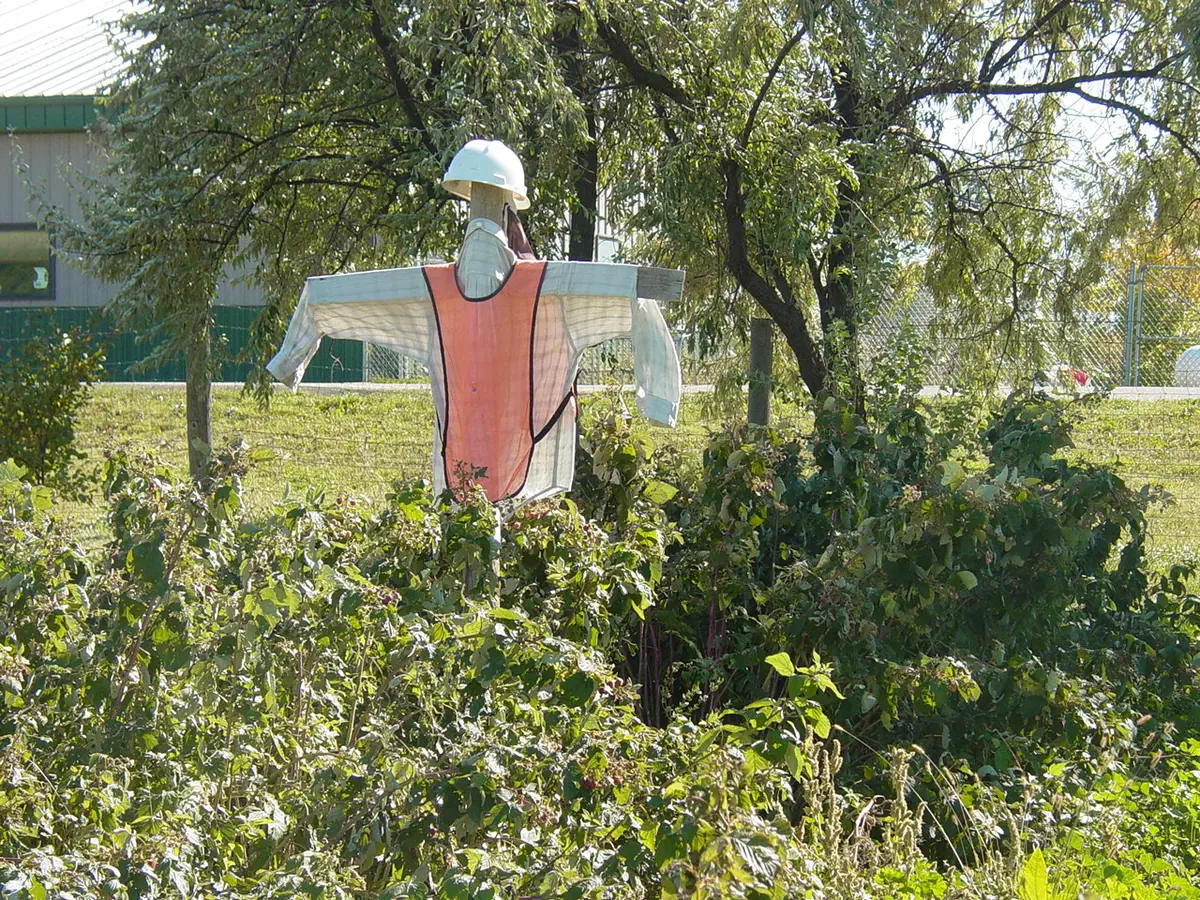
Skip the plastic owl unless you’ll actually relocate it. APHIS is blunt about simulated predators: plastic owls and hawks are often used unsuccessfully against roosting and nesting birds. The same review calls scarecrows of limited value unless you add movement or another control measure alongside them.
Crows Dive-Bombing You in Late Spring
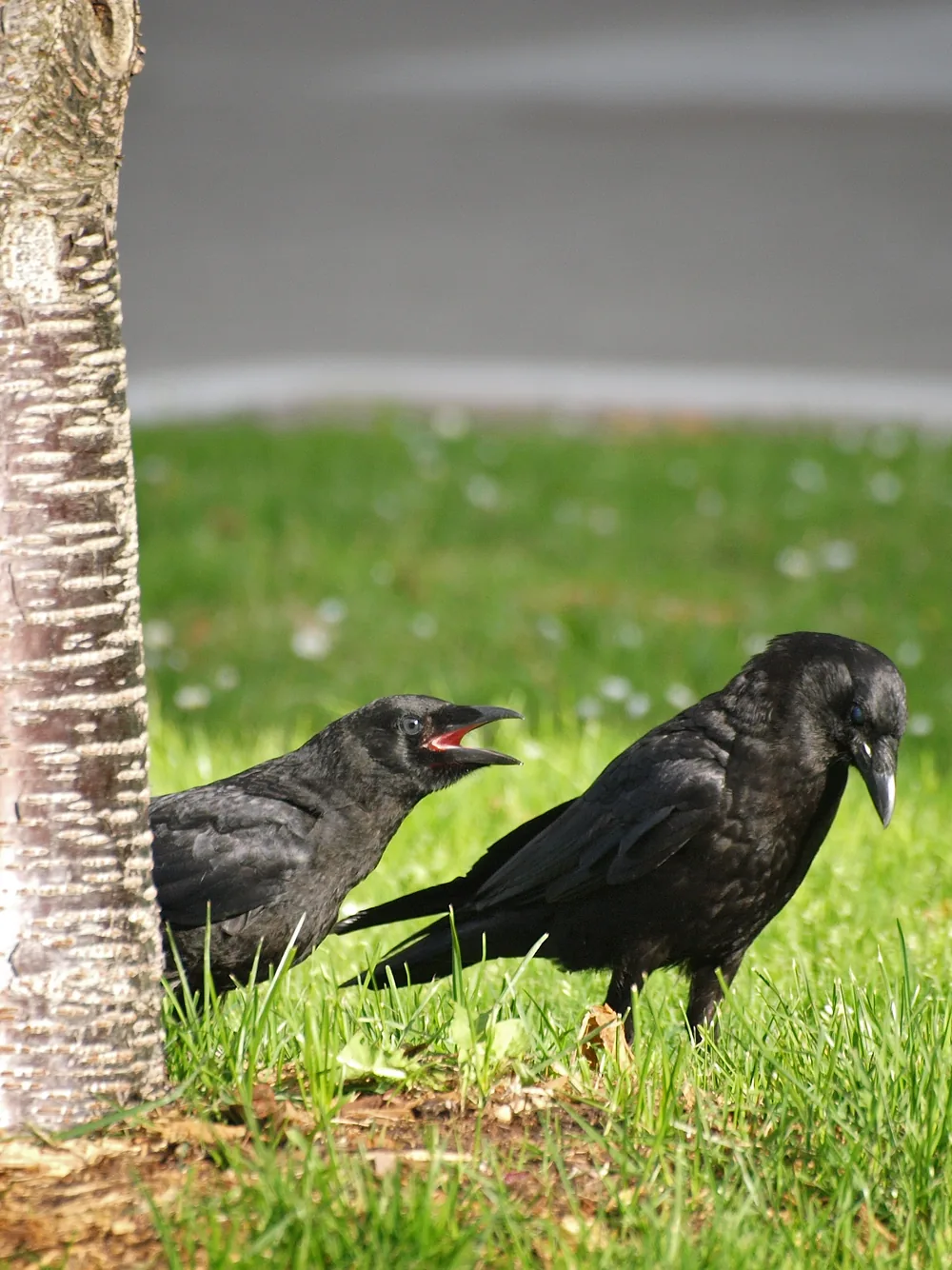
If a crow is swooping at your head in May or June, you don’t have a deterrent problem. You have a fledgling under a tree somewhere nearby.
Crows build nests from as early as mid-March to as late as mid-July, depending on where you live. The adults turn loud and defensive as soon as the eggs hatch. Chicks leave the nest around four weeks later, then keep being fed for roughly another month. During that stretch a young crow that flies badly often sits on the ground or on a low branch, with a parent watching from above.
Scaring the parents is pointless and it backfires. They aren’t leaving while the young bird needs them. Worse, crows remember faces. A University of Washington study found that wild American crows learned to recognize a person who had handled them. They kept scolding that face for at least 2.7 years (Lasting recognition of threatening people by wild American crows, Animal Behaviour). Make yourself the threat and you can be the one getting escorted down your own driveway next spring.
Take the other path instead. Walk a different route past the tree for a few weeks, carry an umbrella if you can’t, and leave the fledgling alone. The behavior ends on its own when the young bird is flying properly. The crows page covers what normal crow family behavior looks like through the season.
A Winter Roost of Hundreds in the Trees
Communal night roosts are a different scale of problem. They’re also the one case where the professional playbook really is about scaring.
Crows gather into these roosts from autumn through late winter. Penn State Extension puts the large northeastern ones in the tens of thousands. They break up around late February to early March (Managing Urban Crow Roosts, Penn State Extension).
Two things decide whether harassment works. The first is how long the roost has been there. WDFW advises acting quickly when a large roost appears, because birds give up a site they haven’t used long far more readily than an established one. The second is whether you keep at it, which the next section covers.
Be honest about the outcome, too. Successful dispersal usually means the crows move to a park or a neighbor’s trees rather than leaving town. A roost that size is a call to your state wildlife agency or a licensed wildlife control operator. It isn’t a weekend project.
Why Every Scare Device Stops Working
Habituation isn’t a flaw in cheap products. It’s the expected result whenever a threat signal keeps arriving without any consequence attached.
Recorded distress and alarm calls show this most clearly. WDFW explains the logic: a crow gives those calls when a predator is present, so it expects to see one. When nothing ever turns up, the birds work out that something is off and tune the recording out faster than they would a random noise. That’s why the agency recommends pairing the broadcast with a visible predator model, and why APHIS says calls work better alongside a method that presents a real threat.
Three habits slow the decay, and they cost nothing:
- Only run it when birds are present. APHIS notes that activating acoustic devices only when birds are there may extend how long they keep working. A speaker on a timer is training the flock to ignore it.
- Keep the volume normal. APHIS advises playing calls at a level birds are used to hearing. Louder isn’t more threatening, it’s just louder.
- Move it, and change which “it” you use. Rotate the device and its location every two or three days. Minnesota’s DNR notes crows quickly learn that stationary objects, including the speaker itself, pose no threat.
Crow effigies, meaning a dead-crow model hung in an unnatural position, are the most crow-specific option available. Minnesota’s DNR calls the research on them promising, which is warmer than most devices get. The evidence is still mixed, and every source adds the same condition. Used alone and left in place, an effigy fades like everything else.
Timing Is Most of the Effect
For a roost, when you scare matters more than what you use.
Start as the first birds arrive. WDFW puts that at roughly an hour and a half before dark. Keep going until it’s genuinely dark, because the same flock will circle back at the site several times, and stopping early hands them the roost.
Then stop. Pushing on after nightfall just gets the birds accustomed to the sound. If you’re using recorded alarm calls, WDFW suggests ten to fifteen seconds per minute while birds are still coming in, then continuous play once most are perched. An early-morning session, starting just before daylight when the roost first stirs, beats working evenings alone.
Then repeat. APHIS puts the usual figure at five to ten consecutive nights before crows abandon a site or split into smaller groups. The first winter or two may need nightly hazing for several weeks before it eases to a few nights every two or three weeks. Penn State recommends starting in October as migrating birds return, before the roost is established.
Expect the birds to try somewhere nearby. APHIS sends teams through surrounding neighborhoods from the first night looking for new roosts, and WDFW says the same effort may be needed at those sites. Skip that and the flock relocates a few hundred yards and waits you out.
What Doesn’t Scare Crows
Worth knowing before you spend anything:
- Ultrasonic repellers. Crows can’t hear the sound. There is no version of this that works.
- A plastic owl bolted to the fence. Static predator models are specifically called out as often unsuccessful.
- A scarecrow that never moves. Limited value without added movement or another method.
- Lasers used alone. Minnesota’s DNR notes crows dispersed by lasers alone usually return the same night and won’t abandon the roost. Penn State says the same. They’re a supporting tool for a coordinated night program, not a homeowner purchase.
- Chasing them yourself. Crows learn the faces of people who have threatened them, so you risk becoming the thing they scold instead of the thing they avoid.
Thinning roost trees sits in an honest gray area, and the agencies disagree. WDFW and Minnesota’s DNR both suggest removing up to half the branches, or thinning dense groves, to make a roost site less appealing. Penn State says there’s no indication that tree thinning moves crow roosts, even though it works on starlings and blackbirds. If you’re pricing expensive tree work on that basis, run the harassment program first and treat pruning as unproven for crows.
Legal and Welfare Limits on Scaring Crows
American crows sit on the federal list of birds protected under the Migratory Bird Treaty Act (50 CFR 10.13). That’s why every agency source above builds its guidance around non-lethal deterrence, and why scaring is the route they recommend to homeowners.
Lethal control is a separate question with its own rules. A federal depredation order covers American, fish, and northwestern crows in specific situations, such as serious damage to crops or livestock feed, or a health hazard. It also requires that non-lethal methods be tried first each calendar year, and that you follow state and tribal law (50 CFR 21.150). Check with your state wildlife agency before treating that as permission for anything.
Nests need a careful reading, and the rule is narrower than most people assume in both directions.
Destroying a nest that holds eggs or chicks is illegal, as is destroying one with young still dependent on it. But federal wildlife officials also state that the Migratory Bird Treaty Act carries no prohibition on destroying an empty nest by itself, provided no possession occurs (Bird Nests, U.S. Fish and Wildlife Service). Removal that ends up taking birds or eggs is still fully prosecutable.
In practice, confirm a crow nest is genuinely empty before you touch it. With four weeks in the nest and another month of feeding after that, empty comes later in the summer than people expect. The full picture is on are birds protected by law.
Two more limits worth holding onto. Check local noise ordinances before running anything loud, and treat pyrotechnics as a professional tool, since Minnesota’s DNR warns their sparks can start grass fires. And if a roost has been active in one spot for years, the droppings underneath are a public health question rather than a nuisance one. Call your local public health office rather than pressure-washing it yourself.
When Scaring Is the Wrong Tool
Reach for something other than a deterrent when:
- A food source is still open. Close it first or nothing else holds.
- The target is a specific crop or structure. Netting, line, or a physical cover doesn’t decay, and crows can’t learn past it.
- A fledgling is on the ground. Wait it out. Three or four weeks, and the birds move on themselves.
- The roost runs to hundreds or thousands of birds. That needs coordination across properties and usually an agency or a licensed operator.
- You’ve already run a rotation properly and it failed. Something is still rewarding them, and finding it beats buying another device.
The pattern underneath all of this is the same. Crows leave when a place stops being worth the trouble, and a scare device is only ever one half of that equation.
Images: American crow scavenging a discarded cookie by Paul Danese, CC BY-SA 4.0. American crow and fledgling by Ingrid Taylar, CC BY 2.0. Garden scarecrow by the U.S. Department of Agriculture, public domain. Via Wikimedia Commons. All three photos were resized and converted to WebP from the originals; no other edits were made.


Free: The 5-Step Bird-Proofing Checklist
Work through the right steps in the right order, before spending money on the wrong deterrents. Printable PDF, straight to your inbox.
No spam. Unsubscribe any time.