Types of Bird Nests: How to Identify Who Built That Nest
Contents[hide]
The main bird nest types are cup, cavity, platform, scrape, and mud. Location and shape identify the builder. A mud cup on a wall is a swallow, a stick platform in a tree is a hawk or crow, and a vent cavity is likely sparrows or starlings. Identify the species before touching, since most are protected while active.
In this article, we’ll cover the main types of bird nests, how nest shape reveals the species, and what the law says about each.
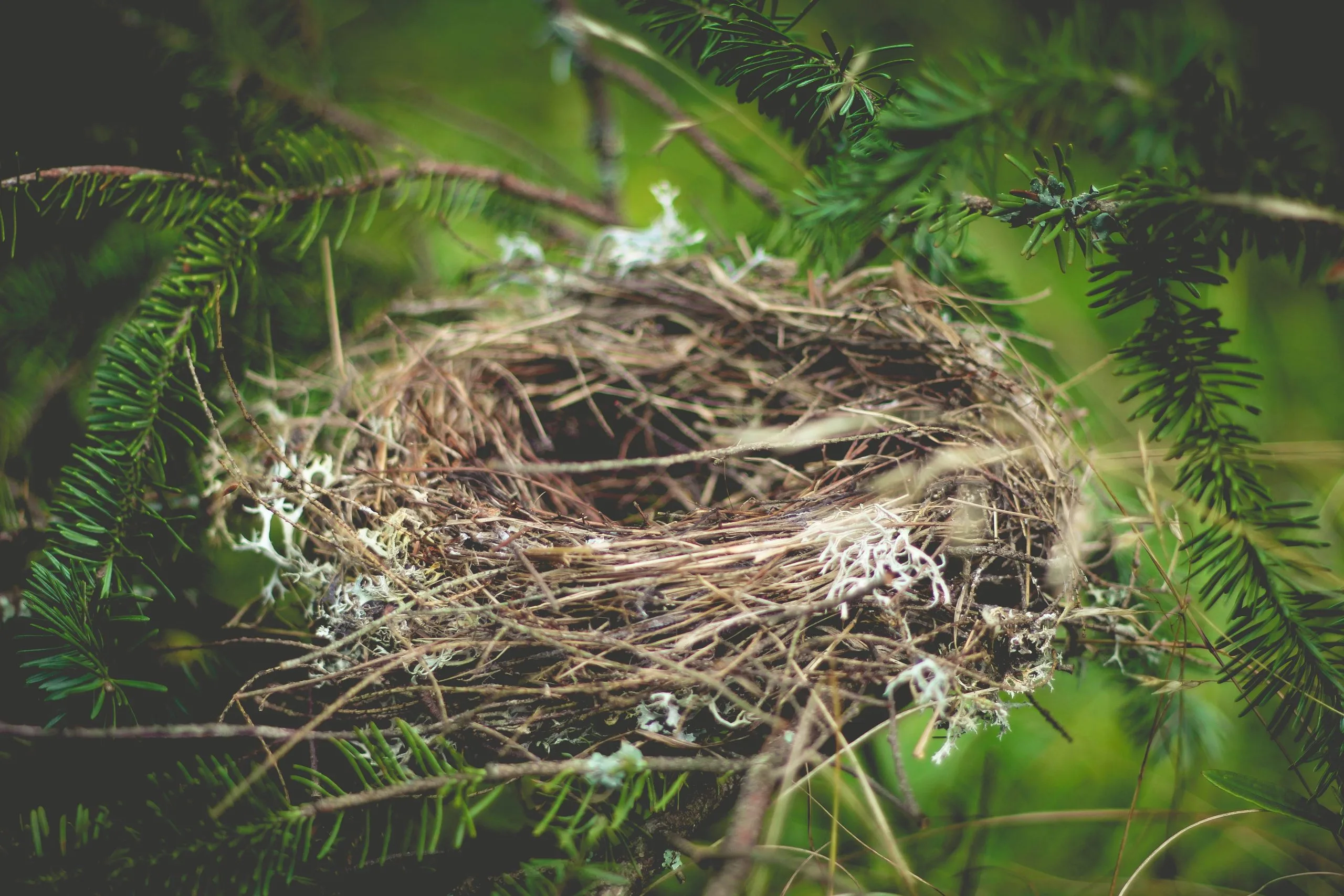
How Do I Identify a Bird by Its Nest?
Eight shapes cover almost everything you will find.
Cup-Shaped Nests
The classic bird nest. Cup nests are the most common type in North America. Robins, finches, warblers, thrushes, blackbirds, and hummingbirds all build them. The bird weaves an open bowl from grass, twigs, and plant stems.
Then it lines the bowl with whatever soft material is on hand: moss, feathers, pine needles, animal fur, even spider silk. A cup of moss and feathers in one yard may be dry grass and cattail fluff in the next.
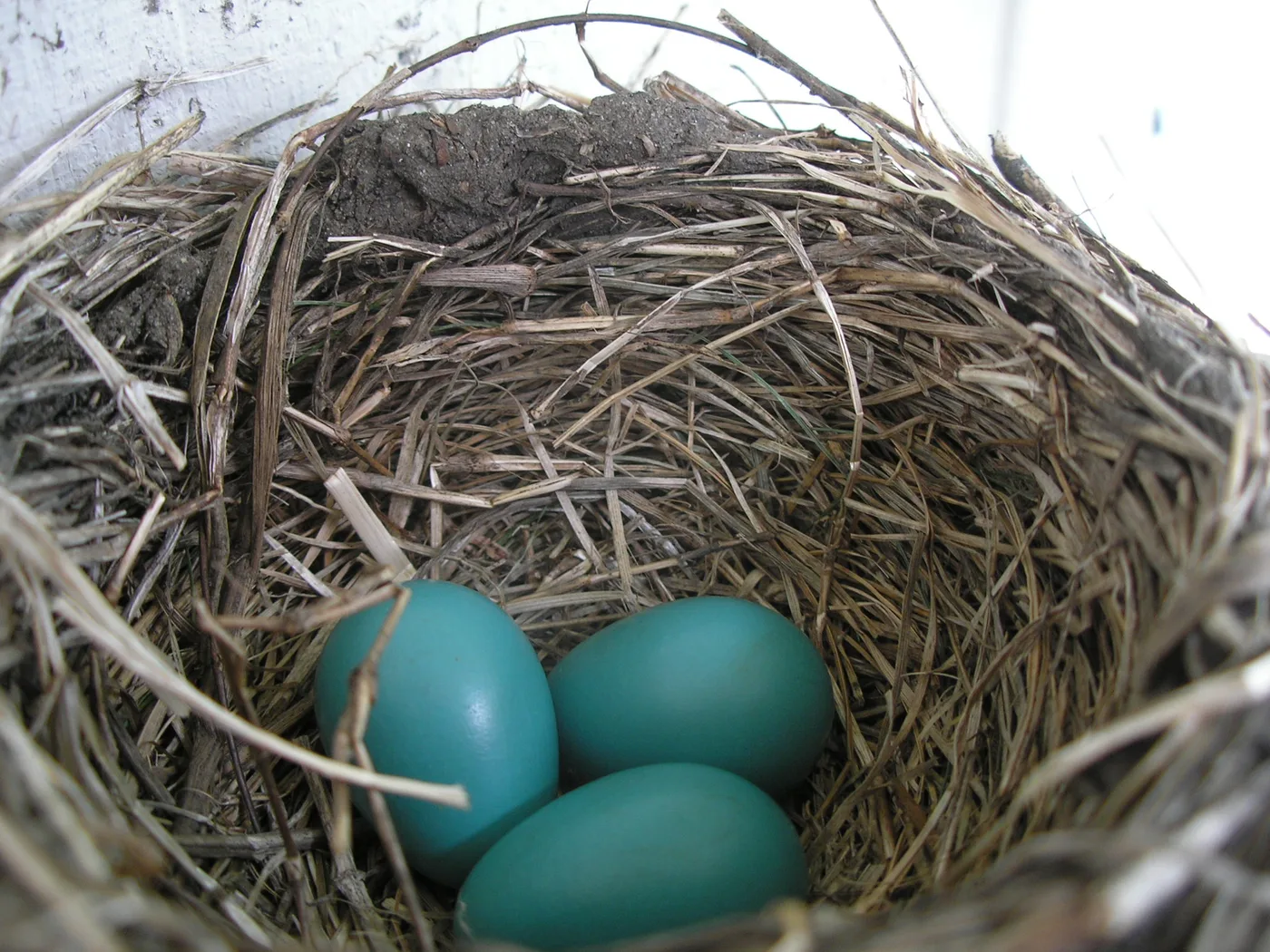
Size is a strong identification clue. A hummingbird cup is barely an inch or two across and often saddled on a thin branch, held together with spider silk so it can stretch as the chicks grow. A robin nest is the size of a cereal bowl, with a telltale mud inner layer. It is usually wedged into a tree fork, a dense shrub, or the ledge of a porch light.
Found a sturdy grass-and-mud cup on a downspout or windowsill with sky-blue eggs? That is a robin, and there are limits on what you can do once those eggs are there. Cup nesters generally want a stable platform with some overhead protection. Where they turn up on houses: porch lights, gutters, wreaths on front doors, and ledges under a covered eave.
Mud Nests on Buildings
Adherent nests are glued to vertical surfaces rather than resting on anything. The two builders you will meet are swallows and swifts, and they are the reason this nest type matters to homeowners.
Barn swallows build open mud cups, pellet by pellet, on beams, ledges, and walls under eaves. Single pairs or small groups. Cliff swallows build enclosed, gourd-shaped mud nests with a small entrance hole, and they nest in colonies; one roofline can carry dozens. Chimney swifts glue small twig platforms to the inside of chimneys using their own hardened saliva.
All three are federally protected once eggs are laid, which makes timing everything. If mud cups are showing up on your beams, you are dealing with swallows, and the only legal window to remove them is before eggs arrive.
Raptor and Eagle Nests
Platform nests are the big ones: broad, flat stick structures built by hawks, bald eagles, ospreys, herons, crows, and ravens. Most sit high in tree branches or on utility poles, cell towers, and channel markers. The birds pile up sticks, branches, and bark strips, then line the cup with soft material. These platform nests get reused and enlarged year after year.
The record bald eagle nest, in St. Petersburg, Florida, measured over 9 feet across and weighed more than two tons. A bulky stick platform high in your tree is most likely a hawk or crow nest. Hawks and crows are fully protected, and their nests are legally untouchable in active season.
If the birds themselves are the issue, hawks and crows each have their own legal deterrence. Geese and ducks build a humbler version: ground-level platforms of vegetation near water, lined with down plucked from the female’s own breast.
Cavity and Hole Nesters
Cavity nests are the type most likely to involve your house. The builders fall into two camps: excavators and adopters.
Excavators dig their own holes. Woodpeckers hammer cavities into dead trees, utility poles, and wood siding. A neat round hole in your cedar siding with wood chips below it is woodpecker work.
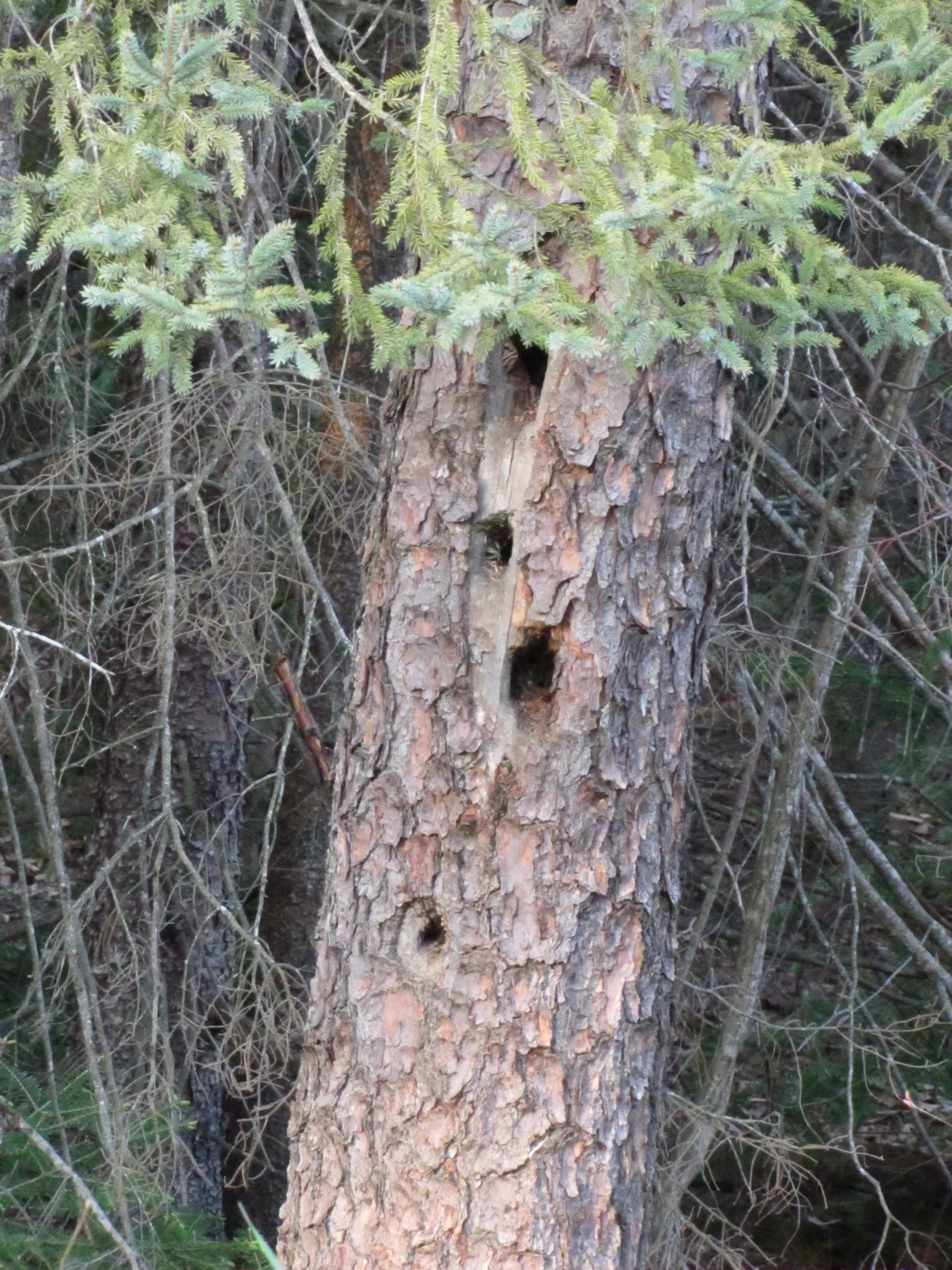
Adopters use cavities that already exist: old woodpecker holes, natural tree hollows, nest boxes, and every gap your house offers. Bluebirds, chickadees, wrens, and wood ducks are the welcome members of this group. House sparrows and European starlings are the unwelcome ones.
Both are invasive, neither is protected, and both will stuff nesting material into dryer vents, bathroom exhausts, and soffit gaps. A nest in a vent is a fire hazard, not just a nuisance.
Sparrows and starlings are legal to remove at any time, and exclusion is what keeps them from coming back. Competition for cavities is brutal, which is exactly why invasive cavity nesters are such a conservation problem.
Ground-Nesting Birds
A scrape is barely a nest at all: a shallow depression in bare ground or gravel, sometimes ringed with pebbles, with eggs camouflaged to match the surroundings. Killdeer are the scrape nester most people meet. They nest in gravel driveways, flat roofs, and parking lot islands, and then fake a broken wing to lure you away from the eggs.
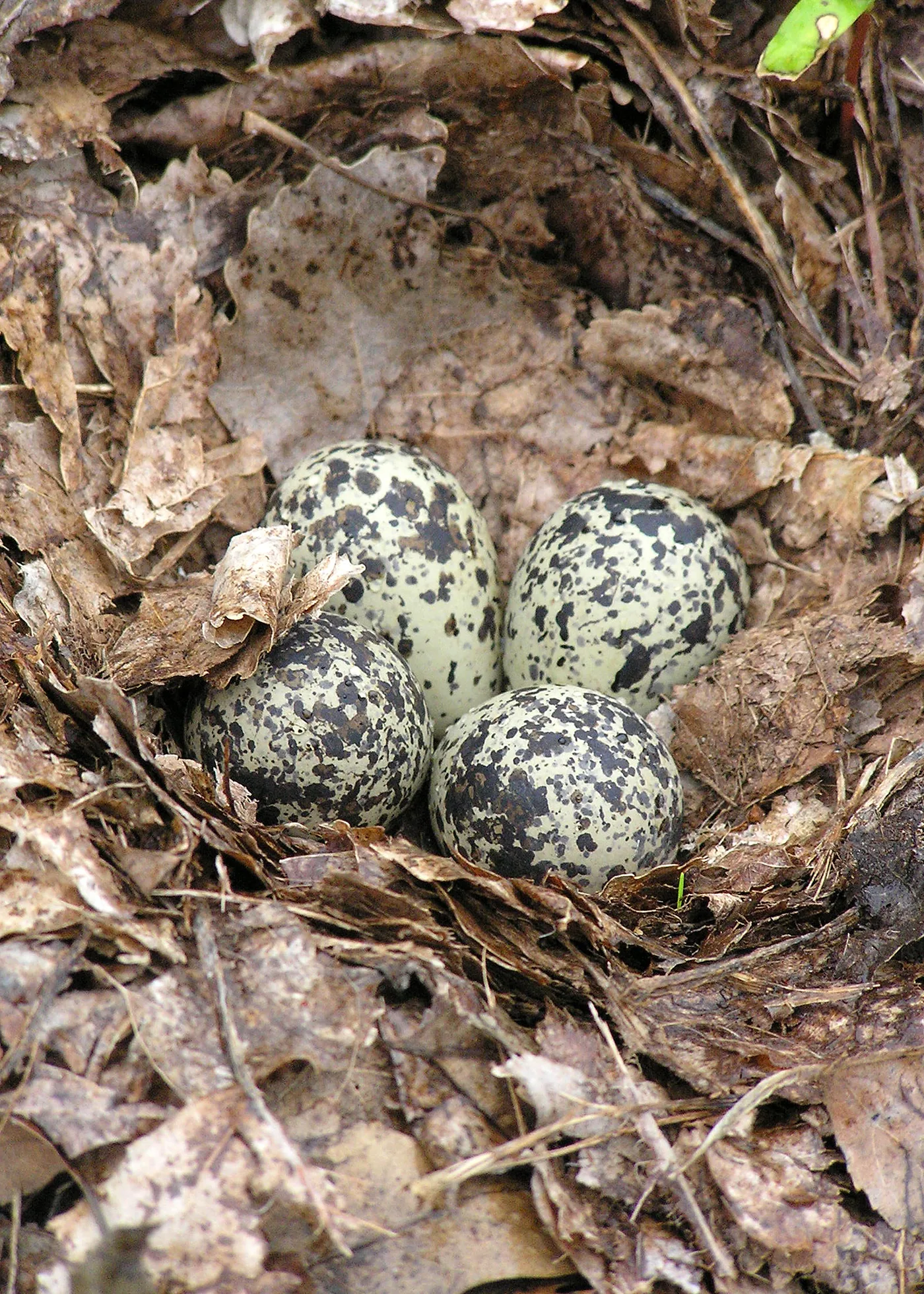
Shorebirds, terns, and nighthawks use the same strategy. If a killdeer has claimed your driveway, the answer is patience. The eggs hatch in about four weeks, and the chicks walk away within hours.
The birds are protected the whole time. Mark the spot with a cone and steer around it.
Mound Nests
Mound builders pile up material and let physics do the incubating. Megapodes in Australia bury their eggs in compost heaps up to ten feet tall, using the heat from organic decay to incubate without sitting. The male monitors the mound temperature by probing it with his beak, adding or removing material to regulate the heat precisely.
Flamingos build foot-tall mud pedestals with a single egg on top, raising it above flood level in shallow lakes. The tall column also keeps the egg cool, since flamingos nest in the tropics where the ground bakes.
None of these will turn up in your yard. But the category rounds out the picture: birds will engineer almost anything to keep eggs at the right temperature without sitting on them constantly.
Hanging and Woven Nests
The showpieces. Orioles weave hanging pouch nests from plant fiber, suspended from the tips of high branches where predators cannot reach. Weaver birds in Africa and Asia knot grass into enclosed baskets with entrance tunnels. Sunbirds build small suspended pouches bound with spider silk.
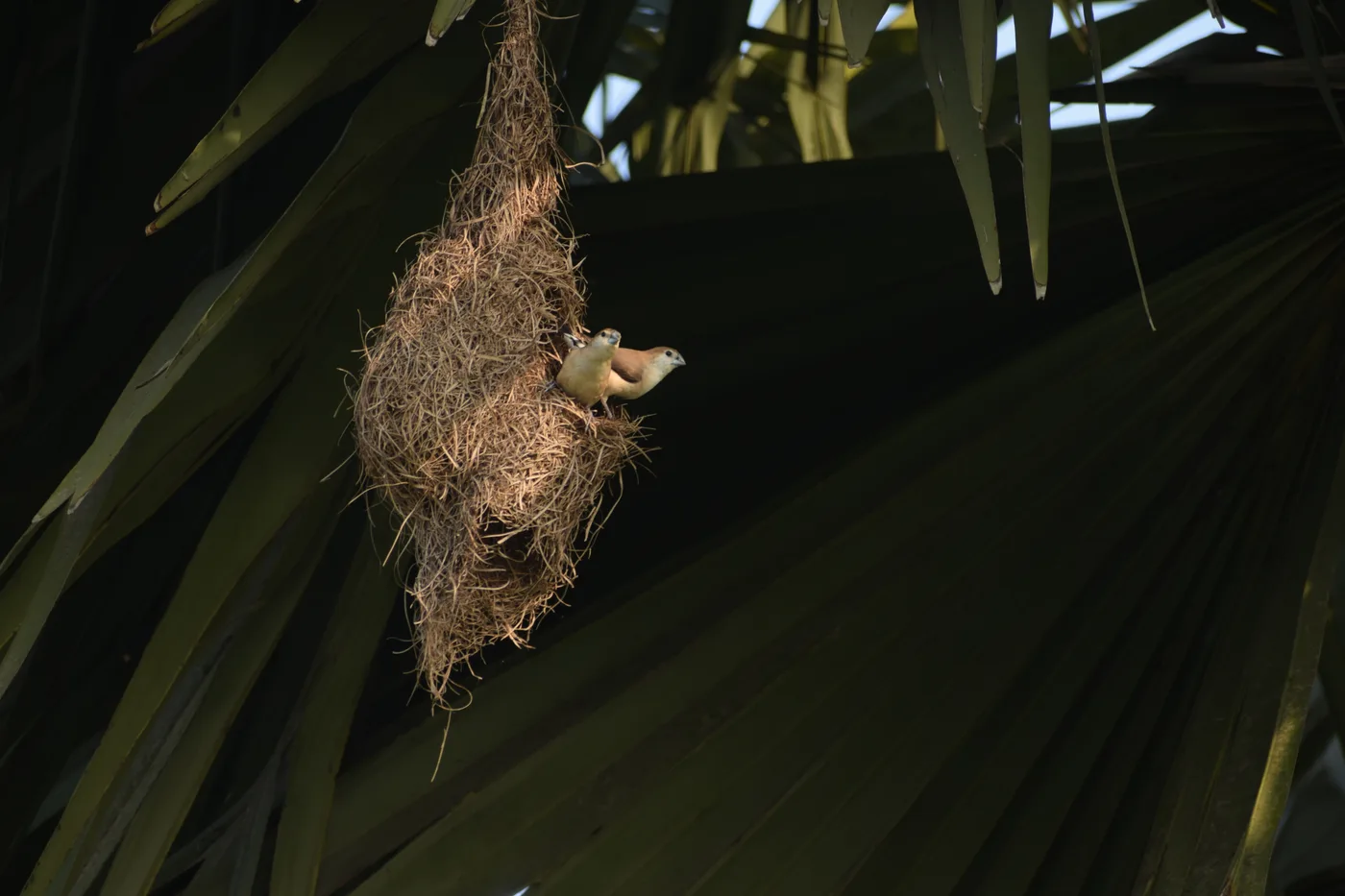
In North America, a tightly woven gray pouch swaying from a high branch is a Baltimore oriole or its relatives. These nests are hard to spot until the leaves drop, harm nothing, and are protected. Enjoy them.
Birds That Skip Nest Building
Some birds skip construction entirely. Peregrine falcons and common murres lay eggs directly on cliff ledges. The murre egg is shaped like a top, tapered at one end so it rolls in a tight circle rather than off the cliff when nudged. Shape, not architecture, keeps the egg safe.
Brown-headed cowbirds are brood parasites: they lay their eggs in other birds’ nests, leaving the host to raise the chicks. This is not laziness. The cowbird egg hatches a day or two before the host’s own eggs, and the cowbird chick often outcompetes the smaller nestlings for food.
About 220 North American bird species raise cowbird young. If you monitor nest boxes, a strange speckled egg among the others is usually a cowbird’s. Adding more eggs nearby to confuse the cowbird is not an effective strategy.
Pigeons come close to the no-nest approach. A few sticks flung on a flat ledge barely counts as architecture. If flimsy stick piles and droppings are building up on your ledges, that is pigeon territory.
Which Birds Nest on Houses and Buildings?
Most nest complaints come from the four species that treat your house as natural habitat. Barn swallows and cliff swallows build mud nests on beams and under eaves. House sparrows and European starlings stuff vents and gaps with nesting material. Pigeons use any flat ledge or parapet.
Birds That Nest in Roof Vents
House sparrows and European starlings are the main vent nesters. They pack flammable material into dryer vents, bathroom fans, and attic louvers. The nest blocks airflow and creates a fire hazard near the heating element.
Both species are unprotected, so nests can be cleared at any time. The fix is a heavy gauge metal vent cover with openings under 1.5 inches across, too small for a sparrow to enter.
Chimney swifts use chimneys, but they are federally protected. A chimney cap installed before spring is the right prevention, since removal of an active swift nest is illegal.
Birds That Nest Under Eaves and Soffits
Barn and cliff swallows prefer the joint where the soffit meets the outer wall, or any overhang that shields the nest from rain. They build fast and return to the same site year after year.
The practical approach is pre-season exclusion: close the gap with hardware cloth or foam backer board before they return in spring. Hang strips of reflective tape nearby to discourage scouting. Both species arrive in March to May depending on your region.
House sparrows pack the same soffit gaps with loose nesting material. Seal any opening wider than an inch before nesting season, since sparrows move in within days of finding a gap and the nest quickly becomes a fire risk. If they are already nesting in a soffit vent, check whether the vent opening is metal or plastic: sparrows can chew through thin plastic covers.
What Are Bird Nests Made Of?
The materials tell you as much as the shape. Each species has a characteristic building palette, and recognizing it helps you identify the bird even when the nest is empty.
Mud, Twigs, Grass: Reading the Materials
A pellet-by-pellet mud construction is almost always a swallow or swift. The mud dries hard, and you will see the distinct pellet texture on the outside. A weave of grass and plant stems with a neat cup shape is a songbird: robin, finch, or warbler. Loose sticks piled with minimal structure is a crow, hawk, pigeon, or ground dove.
Spider silk holding a tiny, stretchy cup to a branch tip is a hummingbird. The lining material also narrows the options. Feathers and soft plant fluff lining a cup point to bluebirds, chickadees, or house finches. Animal fur and horsehair often mean robins or thrushes.
Nest-Building Timeline
Small songbirds build in three to five days. A robin can complete her mud-lined cup in about five days of steady work. Larger birds take longer: bald eagles add to their platform for months before the breeding season begins. Swallows plaster mud nests pellet by pellet over a week or two.
Most songbirds use a nest for one clutch, then abandon it. Some repair and reuse the same nest for a second clutch in the same season, particularly house finches, which can run three or four clutches in a warm summer.
Fire Hazard Materials
Dry plant material in or near a heat source is a genuine risk. Dryer vent nests catch fire when the vent cycles on with the nest blocking the flue. Attic nests made of dry grass near electrical wiring are another hazard. Chimney swift nests, made of dry twigs glued with saliva, can ignite when a fireplace is lit in fall.
The practical rule: any nest in a vent, chimney, or gap near electrical components should be removed promptly after the breeding season, then the entry point sealed.
When Do Birds Start Nesting?
Nesting season is not a single date. Different species start at different times, and knowing the calendar helps you time both exclusion work and legal nest removal.
Nesting Season by Month
In most of the US, nesting runs from March through August, with the peak from April through July.
Early nesters (February to March): Great horned owls and bald eagles begin in late winter. Red-tailed hawks follow in March.
Spring nesters (April to June): Robins, finches, swallows, sparrows, swifts, and most songbirds. This is peak season and the period when you are most likely to find active nests on your property.
Late nesters (July to August): Some species raise a second brood. House finches can run three or four clutches in a single summer in a warm climate. Goldfinches and cedar waxwings nest even later, often starting in July after waiting for thistle seeds and wild berries to ripen, the foods they use to feed nestlings.
Regional variation matters. In the South and Southwest, nesting starts earlier and runs later. Great horned owls in Florida may begin as early as December. In the far North, the whole season compresses: arctic shorebirds arrive, nest, and leave in an 8-week window.
How to Tell If a Nest Is Active or Abandoned
Watch from a distance for 30 to 60 minutes. An active nest has an adult sitting on it, adults visiting with food for the young, or eggs visible inside. An abandoned nest is cold, eggs are dull-colored or cracked, and no adult returns after multiple days.
If you are not sure, check again across two full days. Fledgling birds often leave the nest before they can fly well; a nest that looks empty may have young nearby on the ground. Once you are confident a nest is empty and the young have left, you can remove it legally.
The Nestling Period
The nestling period varies by species. Most small songbirds fledge in 10 to 17 days after hatching. Hawk chicks spend six to eight weeks in the nest before they can fly. Swallow chicks leave in about three weeks.
Once the young birds leave, most species do not return to the same nest for a second clutch that season, though some repair and reuse it. The breeding pair will often try the same location the following year.
End of Nesting Season
The clearest sign is that the nest goes quiet. Adults stop visiting with food, the chick sounds disappear, and the nest sits empty for several days running. At that point, the young birds have likely fledged and left the territory, even if you never saw them go.
Fledgling birds often spend a week or two on the ground nearby, still being fed by the parents but no longer in the nest. If you see a young bird on the ground that can hop and flutter, leave it alone. The parents are almost certainly nearby and still feeding it. A bird on the ground in late summer with full feathers is almost always a fledgling, not an injured adult.
By late August in most of the US, nearly all breeding activity has stopped for the year. That is the safe window to remove empty nests, seal entry points, and install exclusion hardware before the same birds return the following spring.
Can You Move or Remove a Bird Nest?
When Can You Legally Remove a Nest?
The Migratory Bird Treaty Act protects almost all native North American birds, including their nests, eggs, and young. Removing an active nest from a protected species carries federal fines.
Three situations allow legal removal. First, the nest is empty and the breeding season is over. Second, the builder is an unprotected species: house sparrow, European starling, or pigeon. Third, you hold a federal depredation permit for that specific species.
If you are not sure of the species, treat it as protected and wait. Misidentifying a protected bird is not a legal defense.
If a Bird Nests on Your House
Act before the eggs arrive, since prevention is your only legal option once a protected species is nesting. Watch for early nest-building activity in spring and remove the initial material immediately. A few sticks on a ledge is not yet a nest; once it contains eggs, your hands are legally tied.
After the family leaves, safely take down the old nest and seal the entry point with mesh or hardware cloth. Cover any exposed ledges with spikes or wire, and cap the chimney if swifts were involved.
The breeding pair will likely try the same site next year, so exclusion has to happen before they return in spring. How to stop birds from nesting covers timing and methods. Use the bird removal guides to find the right fix for whichever species built the nest.
Images: Robin cup nest by Dima Sergiyenko, CC BY-SA 4.0. Killdeer ground nest by Oregon Department of Fish & Wildlife, CC BY-SA 2.0. Woodpecker cavity holes by Seney Natural History Association, CC BY-SA 2.0. Hanging weaver nest by Zaheed Sarwer Khan, CC BY 4.0. Via Wikimedia Commons.

.jpg)
.jpg)

Free: The 5-Step Bird-Proofing Checklist
Work through the right steps in the right order, before spending money on the wrong deterrents. Printable PDF, straight to your inbox.
No spam. Unsubscribe any time.